
October 13, 2026
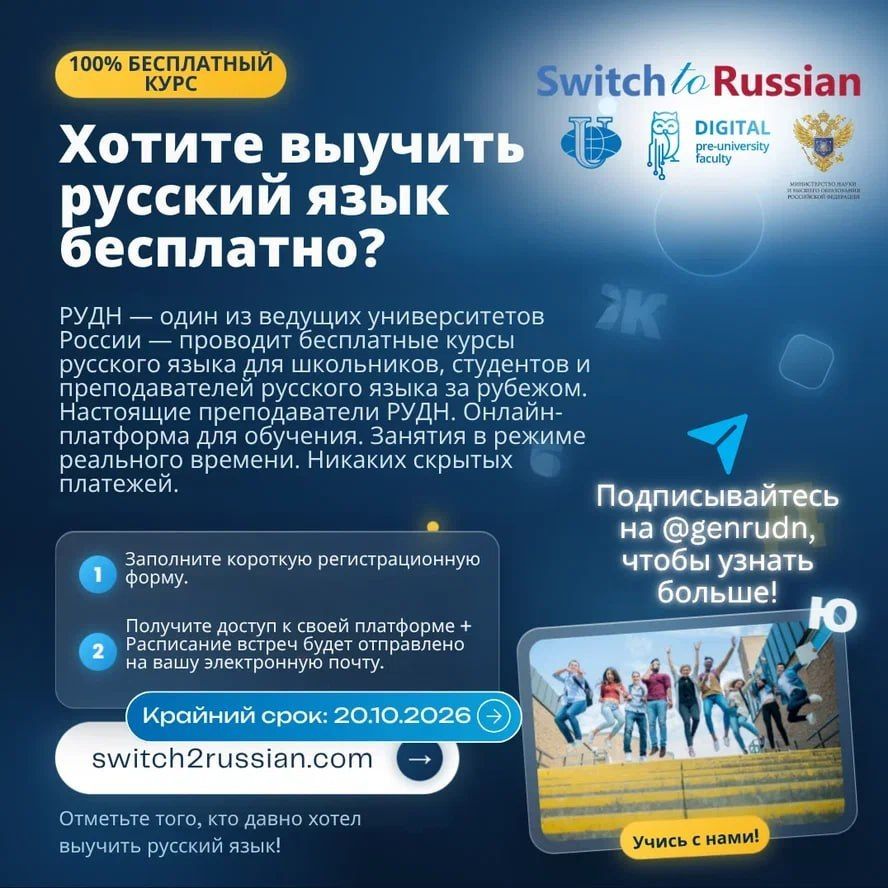
Learn Russian for free from home?
1 min
Communities of Russian-speaking Koreans in South Korea. Do they bring the Russian World to this country through their presence?

South Korea is one of two Southeast Asian countries that Russia has designated as unfriendly. According to Vadim Akulenko, a scholar at the Far Eastern Federal University who has been studying South Korea's Russian-speaking diaspora for three years, he is very surprised that here in Russia we consider this country terribly Russophobic. Koreans know too little about Russia to have any particular attitude toward it—neither good nor bad. And this despite the fact that the country has several dozen enclaves with Russian-speaking populations. But who are these settlers? And do they bring the Russian World to this country through their presence?
Several months ago, an article about communities of Russian-speaking Koreans in South Korea was published on the website of the Russian World Foundation. Today, around 120 thousand Russian-speaking Koreans live in South Korea, having come from Russia and the post-Soviet countries of Uzbekistan, Kazakhstan and Kyrgyzstan. Contemporary scholars studying the Korean diaspora in these countries write that, while still living in the Russian Far East, Koreans readily adapted to the local Russian society: they learned Russian, converted to the Orthodox faith, and adopted the customs and traditions of the Russian population around them, without forgetting their national roots. They did the same in the countries of Central Asia, where the Soviet authorities resettled them in the 1930s. Thus, without ceasing to be ethnic Koreans, these people absorbed a multilayered multiculturalism and brought it with them to their historical homeland—Korea.
There are about 6-7 large centers where Russian-speaking Koreans have settled in South Korea, and up to 30 including smaller ones. But local Koreans often have no idea that the people living here have any connection to Russia. The settlers look entirely Korean and speak Korean. Well, they do have a few distinctive features: they fry blini and bake flatbreads to go with pilaf, celebrate some kind of “Maslenitsa,” have signs in Cyrillic (as do the local Mongolians!), and often speak Russian among themselves. But perhaps that's just their dialect. Locals are convinced that pilaf, samsa and shashlik are traditional Russian dishes, along with vodka. A bear and a balalaika complete the picture. This mix of images, representations and symbols bears no association for native Koreans with real Russia. And compatriots arriving from CIS countries not only do not emphasize or proclaim their “Russianness,” but often do not identify themselves with our culture at all. Only their language gives away that they come from the post-Soviet space.
As of today, our work in South Korea promoting the Russian World, the Russian language and culture can be given a grade of three minus. We are barely represented in the national landscape through books, prominent events or systematic work with the Russian-speaking population. Russian schools are desperately short of teachers, which severely hampers Russian-language instruction for everyone who wants to learn. And there are many….
Publication date: September 18, 2025
October 13, 2026
October 7, 2026
October 5, 2026
October 5, 2026
October 2, 2026
October 2, 2026
October 1, 2026

September 29, 2026
September 29, 2026
September 29, 2026
September 29, 2026
September 28, 2026
September 27, 2026

September 25, 2026
September 25, 2026
September 24, 2026
September 23, 2026
September 23, 2026
September 21, 2026
September 20, 2026
September 17, 2026
September 17, 2026
September 17, 2026
September 16, 2026
