
October 13, 2026
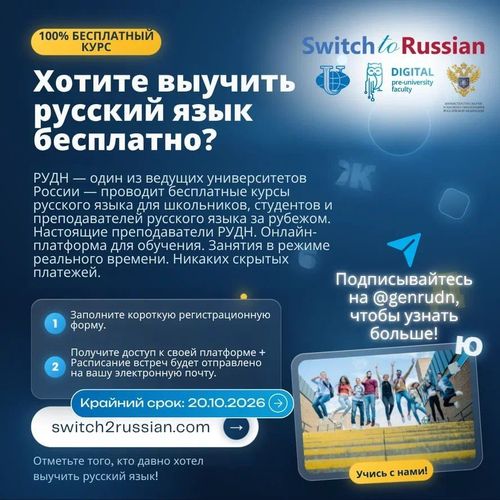
Learn Russian for free from home?
1 min
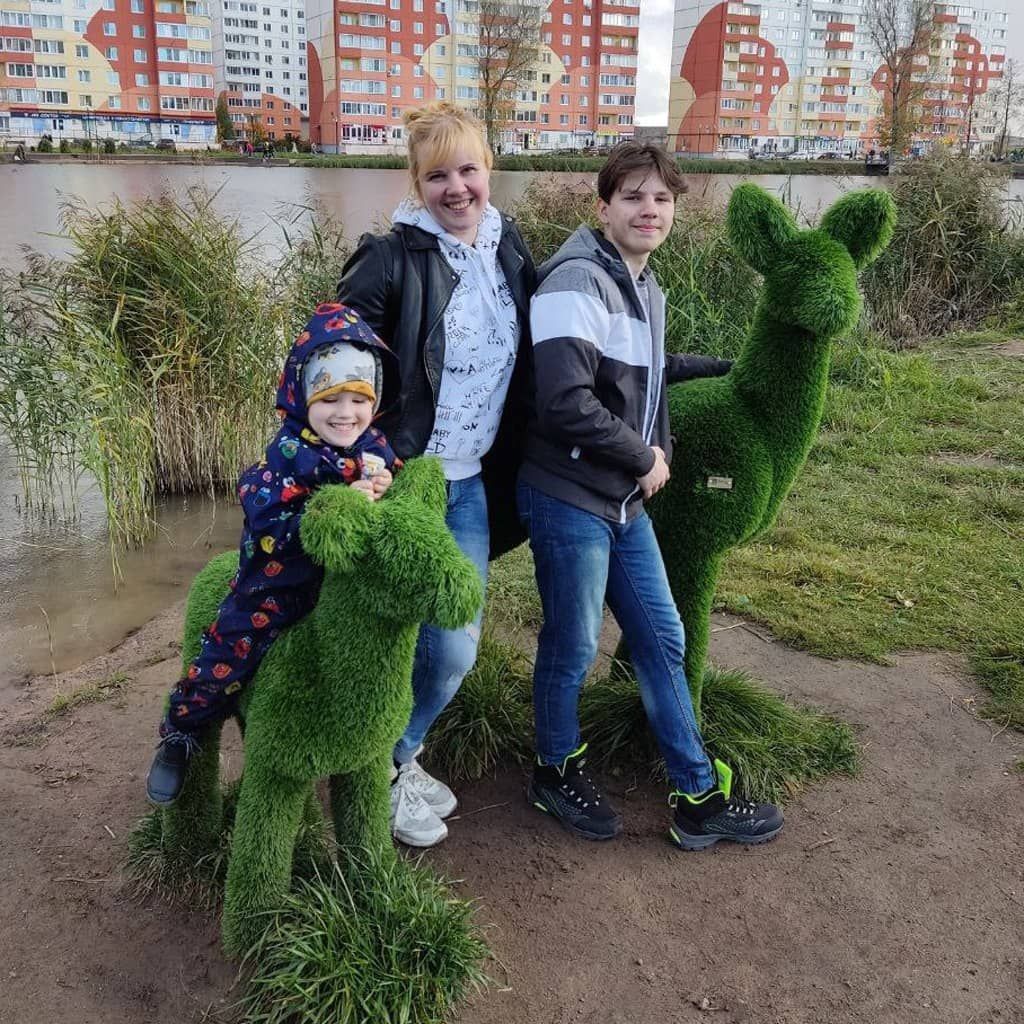
Full version of Alexey Stefanov’s interview with Victoria Romanova, an employee of the Path Home project.
All those who have moved from Latvia to Russia have one thing in common—they are happy to return to their ethnic homeland, to their roots, where everything is in their native language, the environment is comfortable, and the people are friendly. But everyone’s story is different: some settled in easily, while others had to face difficulties with paperwork, finding housing, and registration.
Victoria Romanova said her family was lucky: they moved to Veliky Novgorod under the state resettlement program with almost no problems and settled in well. Thanks to the help of other people who had moved from Latvia, her sons (3.5 and 14 years old) started kindergarten and school, and she and her husband found jobs without any problems.
“We moved from Latvia to Russia at the beginning of October. We moved under the resettlement program—there is, after all, a specific list of regions you can move to. We chose Veliky Novgorod because after living in small Latvian towns, it was a little scary to go to some metropolis. And being close to the border also played a role, because close relatives remained in Latvia. We also had a family of resettlers we knew in Novgorod; we had known them back in Jelgava. They moved two years ago and offered to help us,” Victoria Romanova said.
She notes that her family initially lived in Daugavpils, then moved to Jelgava, closer to Riga. But changing the location did not change the situation—they decided to move to their ethnic homeland.
“The key factor was a familiar Russian environment. We wanted to give the children a good education. Back in seventh grade, I looked at my son’s Russian literature textbook, and, to be honest, I was simply horrified that all the classics were disappearing from it. We want our children to know their traditions, culture, and history. And that was probably the strongest motivation,” the interviewee explains.
Victoria says that “Russia welcomed our family with open arms.” There was only a small hitch at the border with their belongings: their paperwork was filled out incorrectly, and the boxes were held up at customs in Novgorod for two days. “But that was the only stressful part; everything else went smoothly,” she notes.
“There are no problems with documents; in general, people are willing to help, even if there are some inaccuracies,” the interviewee says. “We got the children into school almost immediately, too: we moved in October, there was a period of getting the documents ready, and by the end of November our older son was already studying. The younger one started kindergarten in December. We were given places without any problems. Nobody even suggested that we were foreigners and wouldn’t be accepted.”
At this point, despite the short time that has passed, all the family members already have a temporary residence permit (RVP). But Victoria and her husband were hired even before they had this status.
“My husband worked on a machine tool in Latvia. He went to a company that makes cardboard products, and they hired him right away. It was actually the third job listing he called about. They agreed to hire him even without RVP status, as a complete foreigner. He was welcomed very warmly by the team. I couldn’t start work right away—the stumbling block was the kindergarten. When they gave us a place, I went to the shopping center nearby to buy shoes for my son. I saw they had a sign up saying, ‘Workers wanted.’ I asked them to call someone senior and asked if they were still hiring. They told me, ‘Start tomorrow,’” Victoria recalls.
When she asked whether they hired foreigners, the manager replied, “What difference does it make to us if someone wants to work?” At that point Victoria still didn’t have RVP status either, “but this little green booklet—the resettler’s certificate—can work wonders if you know how to use it properly.”
“You have to explain a little to employers who we are, why we came, and what this booklet gives us, but federal law stipulates that it serves as our work permit. For tax purposes, we are treated the same as Russian citizens. So they shouldn’t hire us, as we are foreigners, but in practice, with this booklet, everything is much simpler,” Victoria says.
I personally had never heard a story about people being hired even without RVP status. More often, people are not readily accepted even with a residence permit. But apparently, something is changing. Plus, every region of Russia is, of course, its own world.
There are no universal recipes for moving, of course, and it is also impossible to know where people will be welcomed as the Romanovs were. But resettlers often have some savings or sell property in Latvia, whereas the Romanovs had nothing and practically set off into the wilderness. And all this was so they could truly be at home.
“We were going home,” Victoria says, adding, “I had a plan: we’d deal with all the issues and problems as they came up, once we got there. And as it turned out, it’s not that difficult. Next, we plan to apply for citizenship and, as local residents suggest, claim maternity capital. Russia is so generous that it even provides maternity capital for children born in other countries. You can put it toward real estate or a mortgage and start settling in and making a life here.”
Victoria’s children reacted to the move differently. The younger one really missed his grandfather—they have a very close relationship. Because of his age, he did not understand that he was now living in another country. On the other hand, as his kindergarten teachers say, whenever he talks about something, he always points out, “But in Russia, we have…” They are amazed: local children of that age do not single out the name of the country they live in, while he is clearly proud of it.
Before the decision to move was made, the family held a full family council with their older son. They asked whether he was ready to move to Russia and face difficulties, without knowing how things would turn out or whether they would even have money for the bare necessities. And he firmly said, “I agree.”
“Mom, I’m ready for anything, just get me out of here,” Victoria quotes her 14-year-old son as saying.
“And he was welcomed wonderfully at school, and his studies started going better,” she continues. “I really liked the teachers—they were proactive, called me into school, and suggested how I could help my child at home. They were very concerned about how my son would react to patriotic education lessons: every Monday they play the Russian national anthem, and they discuss important topics during class meetings. But my son is very, very happy. There was even a moment when I heard him singing something in his room. I went in, and he was sitting with headphones on, singing the Russian national anthem.”
Her son’s personal reasoning was understandable, as it is for thousands of Russian-speaking Latvian children: he wanted to study in his native language, Victoria explains. Because his education was in Latvian, there was a lot he could not understand in time, master on his own, or catch up on, and with each year his performance got worse and worse.
Moreover, his prospects after finishing school were very unclear, while Russia has so many universities and so many opportunities that it is hard to choose. “A year ago, he became very interested in space and said he wanted to become an astrophysicist, but it’s hard to say what will happen next. The main thing is that all of this is becoming a reality.”
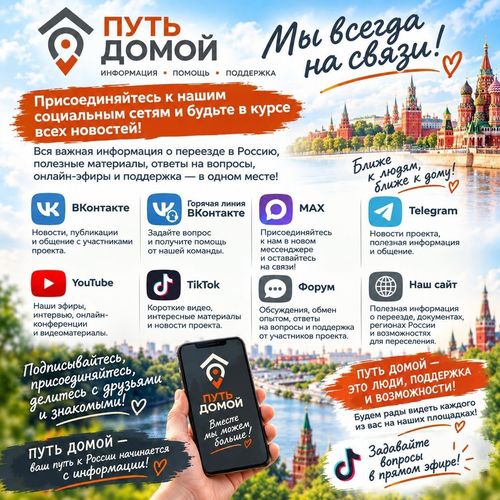
Alongside her job, Victoria has found a hobby: she joined a social project on the “Path Home” Telegram channel and actively advises former compatriots and residents of other countries about moving to Russia. The channel was originally created by Germans who advise people on moving from Germany, but now Victoria has joined and is leading the Baltic region initiative.
“There’s a huge group of like-minded people, enthusiasts, and compatriots who provide information and advise people on how to leave and what documents they need to gather. The information is presented in a fairly structured way, practically around the clock. So I’d be very grateful if you mentioned it. This information may be useful to people, and we’ll be happy to help anyone who wants to come home,” the interviewee says.
Victoria is also ready to help everyone individually. She said that after she posted a TikTok video called “That’s it, we’re leaving,” she was flooded with so many questions that she realized she needed to help people urgently.
“And just because of that one video, I developed an overwhelming desire to explain things and guide people. To bring them up to speed and show them that it’s not so frightening and not so difficult,” Victoria Romanova says as she bids farewell.
The original interview can be read here or on the Sputnik Latvia website.
More videos by Victoria Romanova on her personal TikTok channel.
Publication date: June 5, 2024
October 13, 2026
October 7, 2026
October 5, 2026
October 5, 2026
October 2, 2026
October 2, 2026
October 1, 2026

September 29, 2026
September 29, 2026
September 29, 2026
September 29, 2026
September 28, 2026
September 27, 2026

September 25, 2026
September 25, 2026
September 24, 2026

September 23, 2026
September 23, 2026
September 21, 2026
September 20, 2026
September 17, 2026
September 17, 2026
September 17, 2026
September 16, 2026

Do you have any questions?