
October 13, 2026
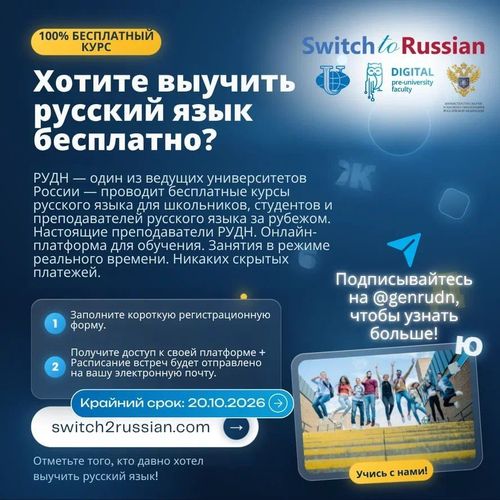
Learn Russian for free from home?
1 min
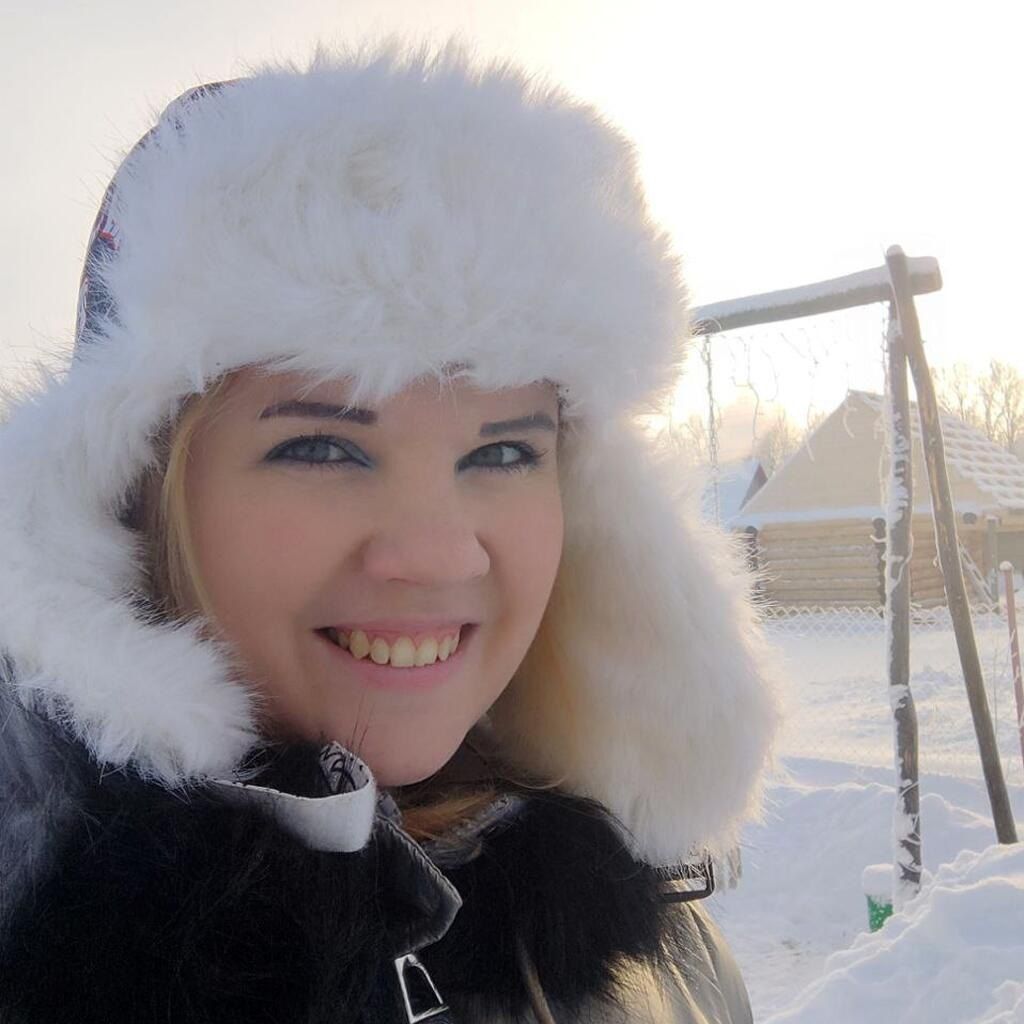
Full print version of the second interview by Alexey Stefanov with Latvian emigrant Victoria Romanova, conducted a year and a half later.
I often tell stories of people relocating from the Baltic states to Russia or Belarus, but rarely report on how they have settled in, whether everything worked out as they had hoped, or whether they want to return. It is time to tell the stories of such families, too.
Victoria Romanova is a former Latvian citizen. A year and a half ago, she and her husband and two children talked about relocating from a small town in Latvia to Veliky Novgorod, what they encountered, and what they expected from the move. Now she has told us what has changed over these past year and a half.
"In October it will have been two years since we moved. We have come a long way in that time. We became citizens of the Russian Federation. Thank God, we had no difficulties. As I said in the previous interview, Russia welcomed us with open arms, and that is still the case. We managed to obtain citizenship quite quickly and without any trouble. We filed the applications ourselves, and the decision came much sooner than the prescribed time. When the migration service called me a month and a half later and invited me to take the oath, I could hardly believe it," Victoria Romanova shares her experience of the past year and a half.
She says the three of them went to take the oath—her husband, her older son, and her. He was already 14 at the time. Taking the oath before the head of the migration service was memorable for its solemn atmosphere: "It was really wonderful, emotionally moving and exciting."

Since rules are constantly changing and laws are being improved, people relocating often run into inconveniences they are not even aware of. Victoria's move was not entirely smooth either.
"The biggest difficulty during our move came when we crossed the Russian border. The legislation had just changed: a special stamp confirming the move was supposed to be placed in the resettler's booklet, but we didn't have one, and they didn't want to let us in with our belongings. We had to arrange a customs transit procedure; we left our things at the customs post in Novgorod and then collected them from there. It was very stressful," Victoria continues.
But in the end, they managed to overcome that obstacle. The procedure has now been simplified, making it much easier for new arrivals to find their way.
There was also a difficulty with bringing in their car. The Romanov family had been leasing the car and bought it out just before the move, and such a vehicle could not be customs-cleared in Russia under the preferential procedure.
"The customs duty was two, or even three times, the value of the car, so we planned to take it back to Latvia. Then, literally about two months before the temporary import period expired, amendments to the customs legislation allowed cars that had been leased to be customs-cleared, provided the relevant documents were available. By a stroke of luck, I found the leasing agreement in a folder with various important papers. We had it translated and notarized, went to the customs post, presented all the documents and showed them the amendments to the law, and they confirmed that the car could be customs-cleared under the preferential procedure," our interviewee still rejoices at their good fortune.
In the end, as Victoria jokes, last September the Latvian car also received Russian citizenship.
Also, under amendments to legislative acts, Russian citizens who were in the Russian Federation on April 1 of this year became eligible to exchange their foreign driver's licenses for Russian ones without taking exams. All they need to do is have their licenses translated and notarized, pass a medical examination, and apply to the State Traffic Inspectorate. All categories are transferred to the new license.
"Everything has gone like clockwork for us since we moved," Victoria marvels.
Since moving, Victoria has met practically all the people who have relocated from the Baltic states to Veliky Novgorod. She took the initiative and organizes get-togethers. There were several large gatherings last year, and three have already taken place this year. The next get-together is planned for June; around 10–15 families will attend, almost all with children.
"These gatherings of adults and children work really well. People recommend them and get to know one another. Some people arrive without knowing anyone at all; they have no support or connections. Some feel there is no way out. Then you meet a kindred spirit who has also buried themselves in all this paperwork. It helps people a lot," Victoria says.
Over the past year and a half, Victoria's hobby—making videos for social media and showing how great life in Russia can be—has also become her full-time job. She joined the volunteer movement "Path Home," which helps people from all over the world return to Russia. She became the right-hand person to project leader Anatoly Bublik and is now responsible for media relations and coordinating the project with government agencies, universities, and the authorities responsible for the regional resettlement program. She holds online conferences with regional authorities, who explain how the resettlement program works in their region, and meets with university representatives, who talk about how they work with international students.
"When you and I met a year and a half ago, I had only just learned about the 'Path Home' project and started getting involved. Over that year and a half, we have managed to grow it into a genuine grassroots patriotic movement that not only helps our compatriots relocate, but also fosters patriotism abroad. Recently, ahead of Victory Day, we organized a competition for children about the Great Patriotic War. We ended up with three winners who won trips to Moscow, and the feedback about the competition was very positive," our interviewee says, describing her daily life now.
A huge number of people wishing to relocate to Russia contact the "Path Home" project's hotline, Victoria continues. They help everyone with advice and support, all free of charge. Since the project began, it has received more than 150 000 inquiries. "No migration service can process that many requests around the clock, nonstop, the way we do."
A year and a half ago, Victoria had already explained why she chose Veliky Novgorod for the move. Moving to a big city felt a little scary, let alone a metropolis; Latvia is just a stone's throw from the border, so friends and family can always come visit. Also, several families they knew had already moved to the city by then.
Victoria has no regrets about her choice. On the contrary, she continues to encourage people to move to Veliky Novgorod. People relocating under the state program often choose it, as well as the Pskov region and Leningrad Oblast.
"Many of our compatriots come to Veliky Novgorod for a walk and to get acquainted with the place. I always try to make time for them and talk, and, of course, after meeting me and walking around the city, Novgorod becomes love at first sight for everyone. After visiting the city, people often choose Veliky Novgorod and move here," Victoria says.
Our interviewee clarifies that it is not quite accurate to say there is a Latvian community in the city. Our compatriots are effectively fleeing the Baltic states, and another reminder of the country that betrayed and cast them out is not the best support in their new home. Nobody dances Latvian round dances or jumps over bonfires. But help, moral support, and emotional and psychological support are there—and they matter to people who have relocated.
"At one of our gatherings, we had a retired couple from Latvia—Russian citizens—who were moving at an advanced age. The woman told us she had seen my videos on TikTok and started thinking about moving. She said that everything seemed fine for them in Latvia; they had even obtained residence permits after all those humiliating procedures under the amendments to the immigration law, and there had been no reason to leave. But then, after watching me, she remembered they had relatives in Veliky Novgorod, talked it over with her husband, and they decided to move. 'At least now, in my old age, I can finally breathe easy. I live in a peace I haven't known for a long time,' she said at our gathering," Victoria shares some of the pleasant moments of life in Veliky Novgorod.
She herself says of the city that has become home over the past year and a half that it is great and green: "It's such a peaceful provincial town, with an absolutely unhurried, measured pace of life. Nobody is running off anywhere or rushing; there isn't the constant unnecessary noise you get in Moscow." Veliky Novgorod is a very cozy city and easy to get around in; at rush hour, you can spend at most about 20 minutes in a traffic jam. It has comfortable public transport, many schools and kindergartens, and lots of entertainment and cultural events, our interviewee continues in her praise of Veliky Novgorod.
"Friends and relatives from Latvia can always get to Veliky Novgorod quickly, and it's only an hour and a half by car to St. Petersburg. And it's easy to get to Moscow, too," Victoria adds.
Since the move, Victoria's father has visited several times. Her mother and stepfather, after visiting a few times, decided to move for good. And her stepfather is ethnically Latvian. His Latvian relatives initially even panicked.
"At first, my mother and stepfather just came to visit, but last summer they stayed for a month. They were no longer looking at everything as tourists; they were feeling things out with a move in mind. Of course, they had considered it before, but only vaguely: maybe someday, when circumstances forced them. And then my stepfather was the first to get excited about it—he became the driving force. He said, 'I've lived here, I've figured it out; the people are great, and I'll find work.' He asked where he should take my mother to start the process. Last fall they completed the paperwork under the state program for resettling compatriots, and in May this year they moved for good. My stepfather's Latvian relatives were shocked at first. They were even upset with my mother, thinking she was the one who had taken him away," Victoria smiles.
Then, our interviewee says, before leaving, her mother and stepfather talked with their Latvian relatives and had a heartfelt get-together. They understood that nobody was forcing anyone to go anywhere and that moving to Russia was a decision they had both made. The relatives wished them a safe journey. Victoria's stepfather's brother even took offense that he had not been included in the resettlement program. He wanted to move to Russia, too.
It is worth noting that Latvian families moving to Russia are commonplace today, Victoria emphasizes. There are many of them, although they do not want to publicize their move. Their reasons for leaving are similar: a desire to raise children with traditional values and a higher standard of living.
"I also really like how my children have taken to the move. My older son will soon be 16; last Friday we celebrated the 'last bell'—he has just finished ninth grade here. He settled in really well, although I worried as a mother. I didn't know how things would go at school, whether he would fall behind—the curriculum in Russia is more advanced, would he catch up with his peers, how would he do with Russian? His classmates treated him wonderfully, too; they accepted him, nobody pointed at him and said, 'Look, an immigrant has arrived.' He made friends, although my boy is probably more of an introvert and likes spending time at home in front of the computer," Victoria says about her children.
Her son is a great patriot of Russia, our interviewee emphasizes. He and his younger brother, who is now five, can even compete to see who is the bigger patriot. Victoria recalls that she told us how her older son used to hum the Russian anthem in his headphones after the move; now the younger one sings the anthem in the mornings.
"Before this trip to Moscow, I asked my younger son what he wanted me to bring him. Do you know what he said? 'Bring me Putin.' I thought I'd misheard him and asked again. He pointed to the portrait of Vladimir Vladimirovich hanging in our home and said, 'Bring me him.' On his fifth birthday, when he blew out the candles on his cake, he made a wish: to meet Vladimir Vladimirovich. Now he dreams of it," Victoria Romanova shared her son's heartfelt wish.
You can watch the video version of the interview here.
Publication date: June 5, 2024
October 13, 2026
October 7, 2026
October 5, 2026
October 5, 2026
October 2, 2026
October 2, 2026
October 1, 2026

September 29, 2026
September 29, 2026
September 29, 2026
September 29, 2026
September 28, 2026
September 27, 2026
September 25, 2026
September 25, 2026
September 24, 2026

September 23, 2026
September 23, 2026
September 21, 2026
September 20, 2026
September 17, 2026
September 17, 2026
September 17, 2026
September 16, 2026

Do you have any questions?