
October 13, 2026
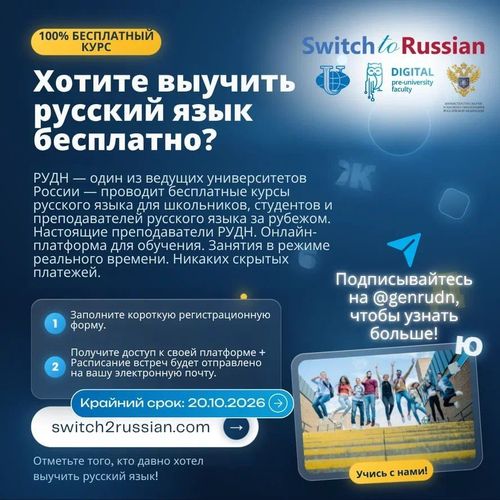
Learn Russian for free from home?
1 min
VTSIOM: The year draws to a close with a reassessment of Russia’s largest employers

The VTSIOM Analytical Center presented the results of a monitoring study on Russia’s best employer. The leading companies retain their positions in the public ranking, but their appeal to potential job seekers—working-age Russians—has declined markedly compared with measurements in previous years. By contrast, the share of people who would not want to work for any company on the list reached a record high of 22% (compared with 8-13% in 2021-2024). Whether this is a temporary fluctuation or a worrying signal for corporations remains an open question.
For the fifth time, Gazprom tops the public ranking of the best employers, albeit with a less impressive result than before (18% compared with 26-40% in previous surveys). It is followed by Russian Railways (10%) and Rosatom (9%); Rosneft and Yandex each scored 8% in the latest survey. One of the country’s largest IT companies, incidentally, remains the No. 1 employer among residents of the capital and members of the digital generation. Roscosmos scored 7%, and Aeroflot 6%.
Zoomers are the only generation whose career dreams seem to soar: for them, civil aviation is more attractive than the “down-to-earth” railway industry. Sberbank and Lukoil each scored 5%; Ozon, Norilsk Nickel, and this year’s “newcomer,” the industrial giant Rostec, each received 4%. The top ten also included Sibur, T-Bank, Transneft, and Wildberries (3% each).
Overall, the so-called raw-material giants are the most attractive to working-age Russians, probably reflecting entrenched public perceptions of the sector’s prestige and earning potential. Historically, the largest raw-material and industrial enterprises have been (and remain) the foundation of the national economy and a symbol of Russia’s economic power on the world stage. Although job seekers’ expectations, like the labor market, have changed considerably, working for a corporation is still seen as a key to prosperity, stability, and social recognition.
A high social standard
Working-age Russians continue to have high expectations of potential employers: on average, 10 of the 12 employer attributes tested are rated above four in importance (on a five-point scale). In other words, employees expect a “full social benefits package” from their employer: basic guarantees, decent pay, flexibility, stability, and comfort. Self-development, however, receives less attention: of all things, the opportunity to prove oneself as a professional and improve one’s qualifications at the company’s expense is almost the last thing potential job seekers expect from an employer. Moreover, these criteria become less appealing with each passing year.
A high salary without additional guarantees is no longer an absolute advantage. For the second year in a row, timely fulfillment of the employer’s obligations leads the ranking of expectations (4.87 points), followed closely by decent pay (4.82 points). In 2022-2023, incidentally, the order was reversed. The top five most important criteria when choosing a job also include stability and confidence that things will not change for the worse (4.50 points), compliance with occupational safety standards (4.47 points), and a convenient work schedule and a favorable psychological climate in the team (4.42 points each). The option to work remotely, though still the least sought-after criterion when choosing an employer, recorded the largest year-on-year increase—from 3.11 to 3.38 points—approaching levels seen three years ago.
In practice, employees receive considerably less. Satisfaction with one’s employer falls well short of expectations: only 3 of the 12 attributes tested receive an average rating of four out of five or higher. As in 2024, working-age Russians are most satisfied with their work schedule (4.06 points), their company’s complete and timely fulfillment of its obligations to employees (4.01 points), and compliance with occupational safety standards (4.00 points).
Over the past year, there has been a decline in satisfaction with one’s current employer on almost every front. The gap between desired and actual pay, and the sense of stability, are felt most acutely. The greatest alignment is found in aspects such as applying professional knowledge and skills at work, having a convenient schedule, and being able to work remotely.
Publication date: November 21, 2025
October 13, 2026
October 7, 2026
October 5, 2026
October 5, 2026

October 2, 2026
October 2, 2026
October 1, 2026

September 29, 2026

September 29, 2026
September 29, 2026
September 29, 2026
September 28, 2026
September 27, 2026

September 25, 2026
September 25, 2026
September 24, 2026

September 23, 2026

September 23, 2026

September 21, 2026

September 20, 2026
September 17, 2026
September 17, 2026
September 17, 2026
September 16, 2026

Do you have any questions?