
October 13, 2026
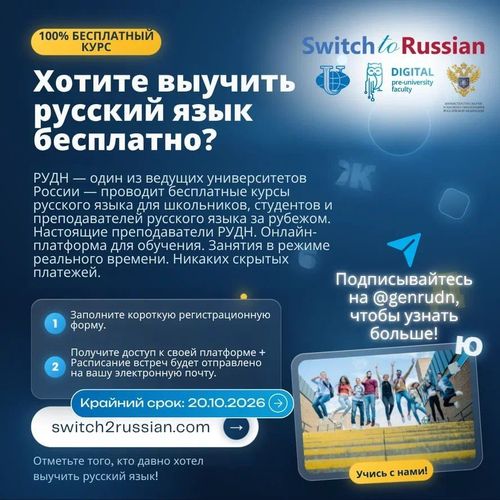
Learn Russian for free from home?
1 min
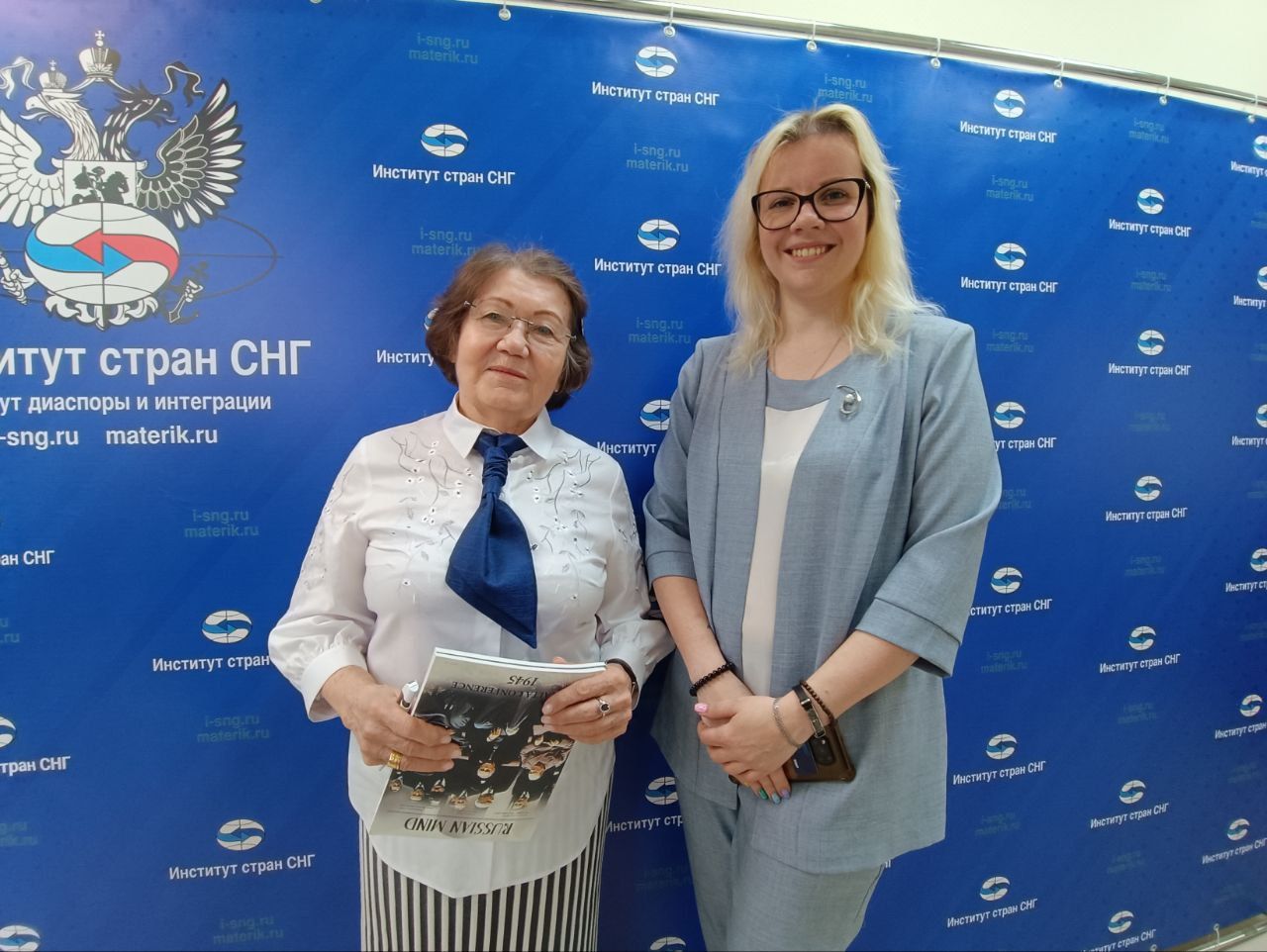
The latest international conference on repatriation to Russia was held at the Institute of CIS Countries. It was devoted to discussing and submitting proposals for the new law “On Repatriation to the Russian Federation,” proposed by Konstantin Zatulin. The State Duma Committee on CIS Affairs, Eurasian Integration and Relations with Compatriots is accepting comments and suggestions on the law until June 4, 2025.
The conference “Repatriation and Citizenship: Legislation and Law Enforcement” brought together scholars, public figures, and writers working on the subject.
In his presentation, Konstantin Fedorovich outlined the path the new law had taken, having received a negative opinion from the Government of the Russian Federation in 2021. One of the main obstacles to the adoption of a repatriation law is the absence of a list of the indigenous peoples of Russia, which is needed to define the term “repatriate” more precisely.
Vladimir Pozdorovkin, First Deputy Executive Director of the Foundation for Support and Protection of the Rights of Compatriots Living Abroad, drew the discussion participants’ attention to the legal gap concerning assistance to people deported from the Baltic states. First, they are not voluntary participants in the State Resettlement Program, since they have been forcibly expelled from their country of residence and, moreover, had no opportunity even to submit documents for the State Program. Second, once in Russia, these people fall outside the Foundation’s assistance remit because they reside in Russia rather than abroad.
“We, the Foundation, are pushing the limits of our capabilities and charter provisions to provide unified financial and other assistance. Such cases require additional legal regulation,” says Vladimir Georgievich.
Victoria Romanova, Deputy Head of External Relations for the Path Home Project, spoke about her experience working with repatriates and resettlers, noting the lack of visible privileges or easier procedures for repatriates relocating to Russia compared with compatriots or foreign expats moving to Russia under Presidential Decree No. 702.
“When the institution of repatriation was being established, we hoped that significant facilitations would be introduced, but unfortunately no ‘green corridor’ for repatriates has appeared... At the time of applying for participant status in the State Resettlement Program, the only difference between a repatriate and a compatriot is that the repatriate does not need to take a five-minute interview. A repatriate takes the residence permit or citizenship exam on the same basis as a compatriot,” says Victoria Andreyevna.
In addition, Victoria Romanova drew the attendees’ attention to a second formal factor that fundamentally distinguishes a repatriate from a compatriot: the absence of requirements regarding professional experience, education, and age. However, around 40 regions of the country have waived such requirements to varying degrees for compatriots from unfriendly countries, thereby equalizing the two statuses.
Almost all conference participants described problems caused by the incompetence of local migration service staff. Their lack of knowledge of laws and changes in the field of compatriot resettlement sometimes becomes an insurmountable obstacle for those wishing to live in Russia.
Olga Vorozheikina, a professor at the Moscow Humanitarian and Technical Institute and a resettler from Uralsk, a city in western Kazakhstan, shared her experience overcoming the difficulties of relocation, highlighting the recognition of Kazakhstani work experience and obtaining a pension in Russia as two of the most important issues.
“Social support for resettlers is necessary, because a person finds themselves in a vacuum: there is no work, no acquaintances or social circle, and psychological problems begin,” says Olga Igorevna.
Conference moderator Alexandra Viktorovna Dokuchaeva, Deputy Director of the Institute of CIS Countries, announced that a conference would be held in autumn 2025 jointly with the Pension and Social Funds of Russia on social security for the rights of compatriot resettlers.
Victor Mikhailovich Kim, leader of the Coordinating Council of Organizations of Russian Compatriots in Tajikistan, pointed out the low level of engagement with the KSORS organizations on drafting new laws and amending existing ones. In his view, when it comes to anything concerning compatriots living abroad, it is important first and foremost to ask the compatriots themselves, rather than limiting consultations to Russian experts.
Participants in the discussion were presented with a draft final resolution supporting the introduction of the new law “On Repatriation to the Russian Federation” and containing a number of specific proposals and comments on its text.
Publication date: May 30, 2025
October 13, 2026
October 7, 2026
October 5, 2026
October 5, 2026
October 2, 2026
October 2, 2026

October 1, 2026

September 29, 2026
September 29, 2026
September 29, 2026

September 29, 2026
September 28, 2026
September 27, 2026

September 25, 2026
September 25, 2026

September 24, 2026

September 23, 2026
September 23, 2026
September 21, 2026

September 20, 2026

September 17, 2026
September 17, 2026

September 17, 2026
September 16, 2026

Do you have any questions?