
October 13, 2026
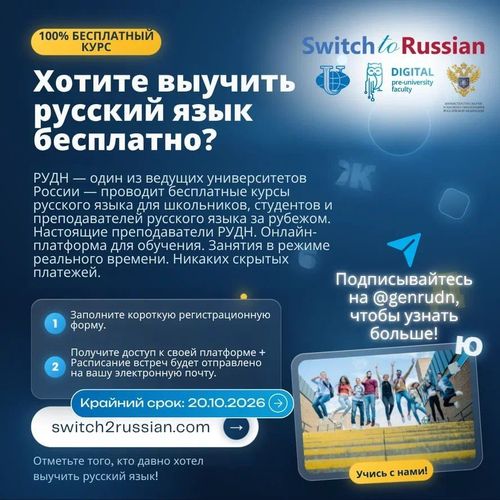
Learn Russian for free from home?
1 min
“Tea, crunch time, and a shared cause,” or the secret chemistry of the Russian team

In Western business literature, employees are commonly called “resources,” “talents,” or “agents.” But the moment these terms cross the Russian border, they are shattered against the facets of our cultural code. It doesn’t matter whether you sit in a glass office in Moscow City or replace a valve on a gas pipeline in Siberia; in a month or two, you’ll find yourself not in a structure, but inside a living organism.
Why does Russian culture inevitably turn a team into something more than just a group of people with shared KPIs?
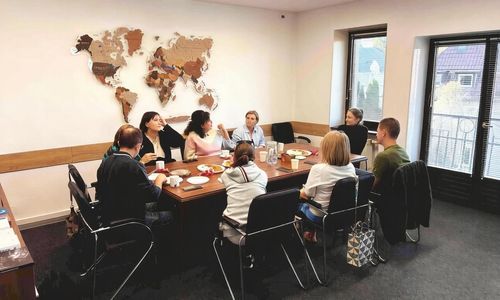
Here’s why: collectivism lies at the heart of our upbringing, and it is often confused with the Soviet past. In reality, it runs much deeper. For a Russian person, work is where they spend most of their life, which means this space cannot be “sterile.” Hence all the kettles, hot plates, and tablecloths in offices.
We instinctively look for the traits of relatives in our colleagues. The boss is a “father” (whether strict or fair is another question); a colleague is a “brother” or “sister.” Even the driest administrative regulations always leave room for human warmth. We don’t just delegate tasks; we ask for help. We don’t just give reports; we share our worries.
There’s a popular myth that “warmth” survives only in work crews, while offices have been taken over by corporate standards. This is an illusion. On the shop floor, it manifests itself through direct mutual support and blunt honesty. There, “one of us” is someone who won’t let you down in a crunch. In the office, the same need takes the form of endless tea breaks, smoke breaks together, and sharing personal news in messengers.
The mechanics are the same: we need to know who is sitting at the next desk or standing by the neighboring machine. Until we learn what makes a person tick, we won’t truly trust them. In Russia, personal trust always ranks above a job description.
Our cultural code is geared toward heroic feats. Doing one alone is dull, but doing it “as one” is just right. This is what foreigners call crisis management, and what we call a normal working process.
Have you noticed that when deadlines are pressing or an accident happens, the boundaries between job titles disappear? The director may hand tools to a mechanic, while the head of marketing starts packing boxes in the warehouse. At such moments, the “circle” closes, and the team becomes a single force. It is precisely during these periods that the bond is forged—one that cannot be written into corporate ethics, but that holds any undertaking in Russia together.
There is an unspoken rule in a Russian team: “Be a human being!” This means that professionalism is the foundation, but human qualities are the superstructure that determines everything. We forgive mistakes made by people we like, and sabotage the efforts of the most brilliant professionals if they are not our kind of people.
This trait makes our labor market difficult to automate and reduce to dry algorithms. We are not cogs in a machine. We are a community.
For us, work is not merely an exchange of time and skills for money. It is also a search for one’s circle, protection from the outside world, and a way to feel part of something. And as long as tea is brewing in office kitchens and jokes are being told in factory locker rooms, Russian culture will keep doing what it does best: turning a dry organizational chart into a living human community.
Publication date: April 7, 2026
October 13, 2026
October 7, 2026
October 5, 2026
October 5, 2026
October 2, 2026
October 2, 2026
October 1, 2026

September 29, 2026
September 29, 2026
September 29, 2026
September 29, 2026
September 28, 2026

September 27, 2026

September 25, 2026
September 25, 2026
September 24, 2026

September 23, 2026
September 23, 2026
September 21, 2026
September 20, 2026
September 17, 2026
September 17, 2026
September 17, 2026
September 16, 2026

Do you have any questions?