
October 13, 2026
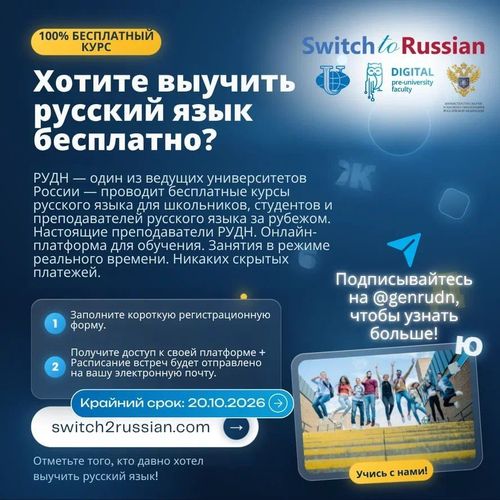
Learn Russian for free from home?
1 min
Anatoly Bublik: A Russian person should have the privilege of being welcomed in their own country
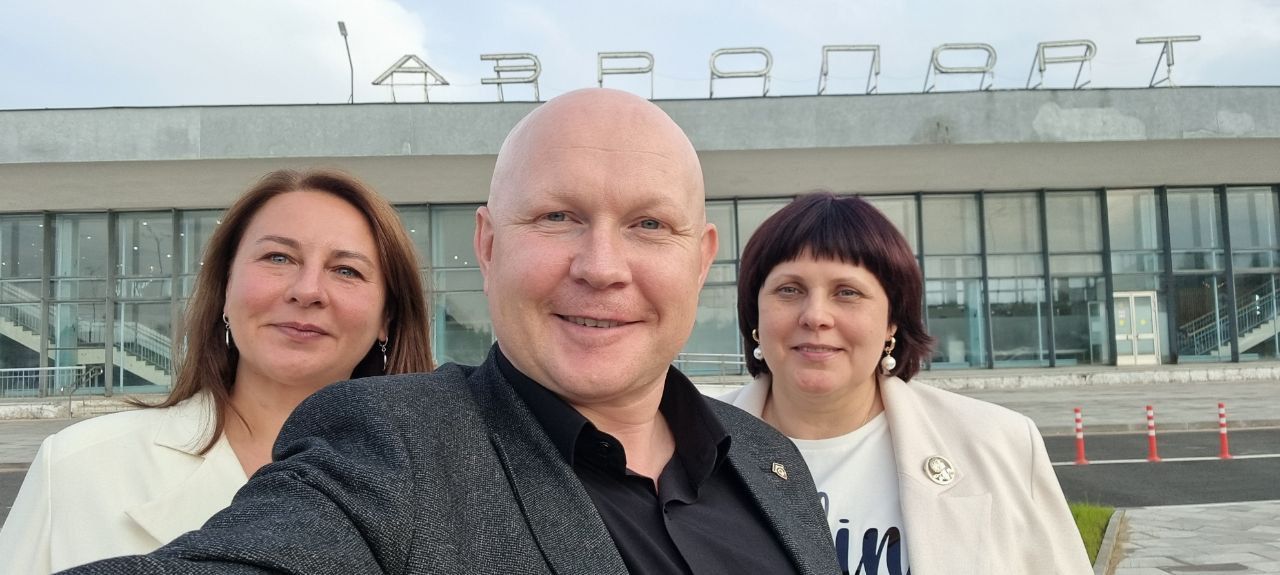
The seminar “Best Practices of Russian Regions in Supporting the Resettlement of Compatriots Living Abroad, Their Adaptation and Integration” was held at the Pskov Region Government on June 6 as part of the forum “Pskov Region: A Place Where You Want to Live.” One of the seminar speakers was Anatoly Bublik, head of the “Way Home” Center for Assistance with Voluntary Resettlement to Russia.
Anatoly Vladimirovich shared his impressions of participating in the forum with our editorial team.
— How new and unexpected was the information you received at the seminar? After all, representatives of the regions spoke there and talked about their experience working with compatriots.
Despite the high level of reception and the government venue, the considerable officialdom typical of such occasions was offset by the remarkable openness and energy of the regional representatives. It was an exchange of best practices, some of which we were learning about for the first time.

It emerged that 5 regions already have, or are planning to open, temporary accommodation centers for resettlers, and are strengthening regional support measures. For example, in Pskov, a small temporary accommodation center for 18 people will be expanded to accommodate 40. In some places, regional financial assistance is increasing from 20 to 50 thousand in relocation allowance per person per month. In Voronezh, the “Compatriot” NGO is opening, modeled on those in Pskov and Kaliningrad; Omsk Region is actively working to improve the conditions for receiving resettlers. Pskov presented its support program for medical workers, who are in short supply throughout the country.
But there is one systemic problem that we heard about for the first time. All the regions spoke of growing requests to resettle: 40% of all applications are from repatriates. But they are not included in the overall statistics for participants in the State Program; they are counted separately. If this is not fixed, next year the regions will have to lower their planned targets for receiving resettlers, even though demand for this is actually growing. To be honest, the rules for counting all categories of resettlers need further examination, but if this is the case, urgent measures must be taken.
All the regions noted that resettlers are getting younger, confirming that they are active, working-age people. They shared their experience working with employers while the resettler was still in their country of residence.
— Here, Pskov Region’s experience is probably among the most advanced. After all, it has a special position dedicated to working with resettlers—the Commissioner for Work with Compatriots and Migration Issues under the Governor of Pskov Region.

Elena Aleksandrovna Polonskaya, the Commissioner for the Rights of Compatriots, works with resettlers while they are still in their own country and guides them from their point of departure in their country of residence to their point of entry at their place of settlement. This continuous route coordination is precisely what makes the approach to the work innovative and comprehensive. Regional ministries of labor and social protection, by contrast, learn about a family only after it has arrived in the region and registered its place of residence.
Elena Polonskaya serves as an adviser to the governor and is in direct contact with him, bypassing all other bureaucratic structures, which also resolves many bureaucratic problems. Importantly, she helps everyone who wants to relocate, rather than limiting her assistance to participants in the State Resettlement Program, as “Compatriot” centers do. For example, during the forum I learned that the head of a family from Croatia, whom we helped relocate under Presidential Decree 702, had found work as an IT specialist at a local factory. Stevimir and Karolina Herzegovac and their seven children are the first foreign expats to arrive in Pskov Region under this decree. Elena Vladimirovna also welcomed them. I would be very glad if structures responsible for helping resettling compatriots and foreigners began opening in all our regions, regardless of the status under which they come to Russia. Everyone needs help.
— Indeed, the Serbian man and Polish woman and their children had lived in Croatia and Canada, but decided to move to Russia. They say that it is here that they feel comfortable.
We were shown an excellent example from the local branch of Sberbank. In one of its Pskov branches, it established a “one-stop shop” service for resettlers. A dedicated specialist works there. In one place, you can get a SIM card and biometric registration, open a bank account, and obtain SNILS.
— Well, the regional authorities, at least those represented at the forum, are trying to improve their effectiveness. What about the efforts of the Ministry of Internal Affairs, which is generally responsible for implementing the State Resettlement Program?
The Ministry of Internal Affairs is the biggest problem. Representatives of the Russian migration service from Latvia and Turkmenistan spoke at our expert seminar. In Latvia, for example, only one of the three employees of the Ministry of Internal Affairs’ migration service remains; the service has had to recall the other two because of a reduction in the size of the office, by decision of the Latvian authorities.
— And this despite the fact that, according to Dmitry Kasatkin, Russia’s chargé d’affaires in Latvia, more than 20 thousand Latvian citizens are interested in participating in resettlement mechanisms to Russia. By the end of 2024, almost 600 people had moved from Latvia to Russia under the program. Over the past two years, requests to the Russian Embassy for resettlement consultations have increased threefold. And the lack of digitalization in this area makes everything even more complicated.
Unfortunately, objective difficulties are compounded by subjective ones: representatives of migration services, both inside the country and abroad, personally harbor unfriendly attitudes toward our compatriots who want to return to Russia. Both participants in the state resettlement program and those moving independently often encounter not only formalism or indifference, but outright rudeness.
We often hear, including from representatives of the Ministry of Internal Affairs, the reproach that our state gives resettlers too many privileges, especially financial assistance. But these people forget that after the collapse of the USSR, it was not the citizens who left the country; the country left them beyond its new borders. And now it must help them return to their homeland. The growing number of repatriates, which all the seminar participants spoke about, shows that financial assistance does not play a particularly significant role in the decision to return to Russia. After all, repatriates do not receive it; the region decides whether to provide material support, if it considers it necessary and possible. A Russian person should retain the privilege of being welcomed in their own country. The Chinese have preserved it, the Jews have preserved it, the Koreans have preserved it.
We talk a lot about migration problems, meaning the excess of illegal migrants. But nobody talks about the fact that catastrophically few of the people we truly need come to our country, compared with other countries. That is why there is no directive for the regions to accelerate efforts to attract resettlers from other countries. And they are in no hurry. I greatly appreciated the constructive approach of Senator Elena Afanasyeva, the moderator of our seminar. She does not deny that “there are countless problems.” She proposes taking action.
Publication date: June 12, 2025
October 13, 2026
October 7, 2026
October 5, 2026
October 5, 2026
October 2, 2026
October 2, 2026
October 1, 2026

September 29, 2026
September 29, 2026
September 29, 2026
September 29, 2026
September 28, 2026
September 27, 2026
September 25, 2026
September 25, 2026
September 24, 2026

September 23, 2026
September 23, 2026
September 21, 2026
September 20, 2026
September 17, 2026
September 17, 2026
September 17, 2026
September 16, 2026

Do you have any questions?