
October 13, 2026
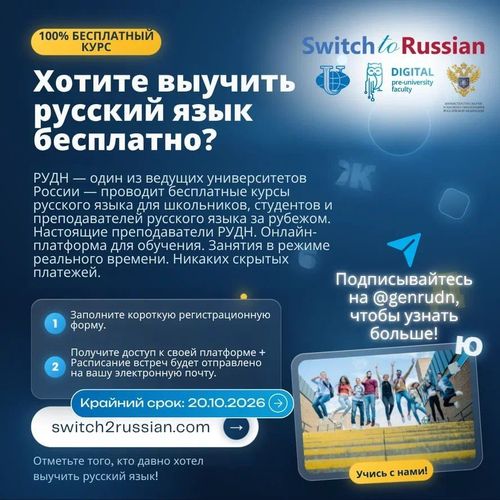
Learn Russian for free from home?
1 min
Moving to another country is always a leap of faith. But when your child is in the back seat of the car or in the seat next to you on a plane, that leap feels completely different. On parent forums and in chat groups for people relocating from Europe, the US, and Canada, education is the hottest topic. We’ve gathered the experiences of hundreds of families who have already been through it, so we can tell you honestly, without sugarcoating things but with deep faith in success, what it will be like—or what it can be like.
Spoiler: everything will work out! But you need to prepare in advance.
So! Don't panic!
Russian schools value order and precision, especially when it comes to documents, which you should gather in advance (everything counts, from vaccination records to the much-discussed character reference). If your child was born abroad, the enrollment process will require legal diligence on your part.
What should you do first?
· Legalize the documents - the birth certificate and school records from the foreign school must be apostilled (or undergo consular legalization, depending on the country where you are staying).
· Have them translated - absolutely all foreign seals, stamps, and text must be translated into Russian and certified by a Russian notary and a translation agency (we recommend getting the translations done where you plan to settle. It's always easier to make corrections locally and understand the requirements of the educational institution itself).
· Get a medical examination - the school will require a medical record in Form No. 026/у, and for that you will need foreign vaccination certificates, which must also be translated. Be prepared to repeat some medical appointments or tests once you're in Russia.
· Take a Russian language proficiency test - for some time now, Russia has required foreign children to take a language test when enrolling in school. If your child doesn't speak Russian well, the school has the legal right to refuse admission until their proficiency improves. All we can do is sigh... This is where online schools come in.
What are the pitfalls of adapting, and what should you be prepared for?
Let's be honest: the first six months to a year won't be easy. And it's not because teachers are malicious, but because the systems differ. We would recommend that one parent, if possible, devote that year to supporting and helping the child—even if they're in grade 9 or 10, let alone grade 11. Let's take a closer look at the system.
So what makes it all worthwhile? And now for the main point: why thousands of parents still take this step and never regret it. Russian education is a unique social elevator and a solid foundation. Here's why:
School in Russia is still school. There is no aggressive gender agenda here; children are taught to respect their elders, make friends, and love their history (for example, the St. George's ribbon has already become an integral part of the school uniform). The school environment is familiar, safe, and geared toward a healthy childhood.
2. Huge opportunities for free higher education
Unlike the US or Europe, where higher education often saddles young families with crippling loans, Russia has preserved a powerful system of state-funded university places. If your child passes the Unified State Exam (EGE) successfully, the doors of Moscow State University, St. Petersburg State University, the Moscow Institute of Physics and Technology, the Higher School of Economics, or any other university in the country open to them completely free of charge with just a few clicks, from home, through Gosuslugi. What's more, the state pays students stipends and provides dormitories. It's a ticket to a future for which parents don't have to pay millions.
3. Accessible opportunities to develop talents
Russia is a unique place for extracurricular education. Music and art schools, Olympic reserve sports clubs, and free engineering Quantoriums—all of this costs very little or is subsidized by the state. In the West, you would have to pay a fortune for this level of development for your child.
The most important advice from experienced relocators and their teachers: start with the bookshelf
If you're still abroad and only planning your move, you can make life 50% easier for your child. Read Russian classics together.
The Russian humanities curriculum is deeply rooted. It is still built around Pushkin, Lermontov, Gogol, Tolstoy, and Dostoevsky. Most exams (OGE, EGE, and essays) require students to support their arguments with examples from literature.
If a child has heard correct, rich, literary Russian since early childhood, knows who the three bogatyrs are, why Gerasim drowned Mumu, and what makes Tatyana Larina's story tragic, they will never be an outsider in a Russian classroom. Books will shape the cultural code that erases any language barrier. Read and discuss them as if you'd just watched a new cinematic masterpiece!
A word of encouragement for parents
Children are incredibly adaptable. The experiences of hundreds of families show that in elementary school (up to age 9), a child can integrate fully and lose their accent in 3-4 months. Teenagers need a little more time, about a year, your support, and perhaps help from tutors.
In the end, though, they gain a unique advantage: they become people of two cultures, with an international outlook and deep, strong roots. School is just the first step toward a great and bright future in the Motherland, a future we all believe in. Having started with a leap of faith, we'll end on that same note. Visit our resources for kind, concise, and informative advice about your relocation.
Publication date: June 2, 2026
October 13, 2026
October 7, 2026
October 5, 2026
October 5, 2026
October 2, 2026
October 2, 2026
October 1, 2026

September 29, 2026
September 29, 2026
September 29, 2026
September 29, 2026
September 28, 2026
September 27, 2026
September 25, 2026
September 25, 2026
September 24, 2026

September 23, 2026
September 23, 2026
September 21, 2026
September 20, 2026
September 17, 2026
September 17, 2026
September 17, 2026
September 16, 2026

Do you have any questions?