
October 13, 2026
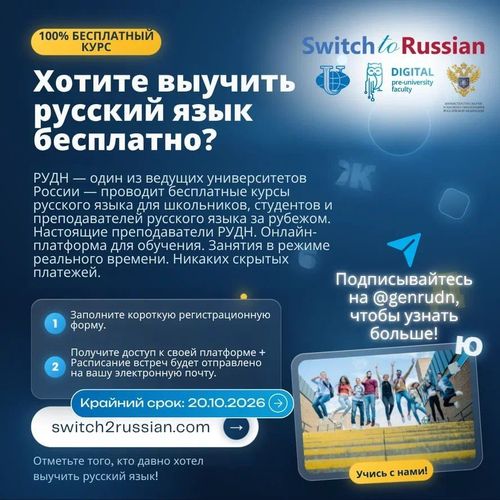
Learn Russian for free from home?
1 min
We are all used to taking pride in the past. From childhood, we were taught that Russia means great literature, the first flight into space, ballet, and fundamental science. That is beyond dispute. But what if we set aside the history books and simply look around us right now, in 2026? What makes up an ordinary day for a resident of a modern Russian metropolis?
If we strip away the bombast and propaganda slogans, what remains are dry but astonishing facts. Over the past fifteen years, an entirely new everyday culture has quietly emerged in the country's major cities. We have grown so accustomed to it that we no longer notice that things which seem basic and natural to us are technologies of the future for most of the planet.
What does the quality of our daily lives look like today, if we judge it not by the news but by the buttons on our own smartphones and evening strolls through the city?
The state and everyday life are now just one click apart. Remember what it used to be like to get any kind of certificate? Queues from early morning, stuffy corridors, lunch breaks, and the famous “there are so many of you, and I’m all alone.” Today, that whole scene is finally a thing of the past. Digitalization in Russia has become a genuine everyday religion, with the main priority being to save people time and spare their nerves.
Let's start with the public services ecosystem: platforms like “Gosuslugi,” “Mos.ru,” or regional equivalents, for example in Tatarstan or Nizhny Novgorod Oblast, have turned the state into a convenient digital service. Replacing a passport, registering a car, signing a child up for a club, or filing for a tax deduction now takes three minutes in an app. No bowing to officials; the system works clearly and transparently. Second on the list of comforts is Russia's financial cosmos, namely the Faster Payments System (FPS), which has quietly brought about a revolution. We transfer money instantly using a phone number with no fees, pay for purchases using QR codes, and even with our faces (biometrics in the metro and supermarkets have long become commonplace). Banking apps in Russia are recognized masterpieces of product design, combining investments, lifestyle, and accounting. And finally, the era of instant delivery, which has freed city residents entirely from everyday errands. Need a carton of milk, fresh bread, or cold medicine at eleven at night? The courier will be at your door in 15 minutes. Express delivery services operate around the clock, without days off or holidays, radically changing our idea of free time.
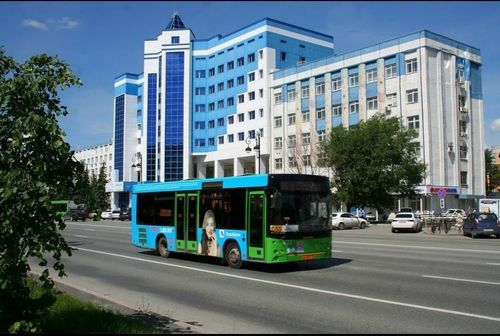
Now for the evolution of transport. For a long time, urban transport was associated with crowding and uncertainty. Today, in cities with over a million residents, it is a highly complex yet perfectly tuned mechanism that respects schedules and passengers' personal space. In Moscow, train intervals during rush hour are an incredible 90 seconds. Major projects such as the Big Circle Line and the Moscow Central Diameters have connected the city's outskirts so well that a private car is simply unnecessary in many cases. Nizhny Novgorod is currently expanding its subway and modernizing its entire tram network, while Kazan is focusing on smart transport hubs. Smaller cities across the regions are rapidly renewing their vehicle fleets. A word about the environment and comfort: noisy buses have been replaced by silent electric buses with climate control, USB charging ports, and free Wi-Fi. The “Lion Cub” and “Bogatyr” trams purchased by Russian cities look as if they have stepped out of a science-fiction novel. And the icing on the cake is a new kind of river transport. Have you ever seen unique year-round electric river trams? This isn't a tourist attraction but a fully fledged part of the transport system, letting you bypass any traffic jams by water. Yes, for now it's in Moscow—but isn't that something to be proud of?
On safety and public spaces.
For the 40+ generation, safety is not an abstract concept but the foundation of peace of mind. It matters to know that loved ones will get home safe and sound at any time of day or night. Today, modern technologies, including smart surveillance systems, have reduced street crime many times over. A woman can walk home alone through a park at night or ride in a nearly empty metro carriage without the slightest anxiety.
It's also worth noting the renaissance of urban parks. Public spaces have undergone a complete philosophical transformation. Gorky Park and VDNKh in Moscow, the embankment of Lake Kaban in that same Kazan, and the renovated Strelka in Nizhny Novgorod are not just green spaces. They are vibrant, clean, and safe hubs. There are no marginalized people, unauthorized dumps, or tent camps here. Instead, there are neat lawns, lecture halls, free sports grounds, and courteous security guards. Urban spaces once again belong to cultured city dwellers.
And then there's healthcare, its accessibility, and the right to choose. Health, especially after forty, requires regular attention. Here, the Russian healthcare model has developed into a unique and highly flexible hybrid. Thanks to unified medical systems (such as EMIAS), your entire medical history, prescriptions, and test results are stored in your personal account. You can book an appointment with a general practitioner for the next day, and referrals to specialists are issued without waits of several months. Hospitals are actively being equipped with modern scanners and robotic systems for high-tech operations covered by compulsory medical insurance. But Russians also have the option of choosing the high-quality private sector. If an issue requires maximum speed, city residents can turn to a powerful network of private clinics and laboratories. Getting a comprehensive set of complex tests done near home and receiving the results by email a few hours later is an industry standard. Domestic dentistry deserves a special mention: in terms of service, quality of materials, and painless procedures, it is now near the top of global rankings, while prices remain quite affordable.
It turns out that quality of life is not just the number of historical monuments per square kilometer. It is the sum of small, everyday conveniences. It's a clean sidewalk that's pleasant to walk along. It's a bus that arrives exactly at 14:30. It's the ability to sort out paperwork without getting up from the sofa, and the confidence that an evening stroll doesn't involve any risks.
Today's Russian metropolises and cities are not frozen open-air museums. They are young, dynamic, technologically advanced centers that have learned to respect their residents' time, comfort, and safety. And that is the reality we can and should be proud of right now.
Publication date: July 24, 2026
October 13, 2026
October 7, 2026
October 5, 2026
October 5, 2026
October 2, 2026
October 2, 2026
October 1, 2026

September 29, 2026
September 29, 2026
September 29, 2026
September 29, 2026
September 28, 2026
September 27, 2026
September 25, 2026
September 25, 2026
September 24, 2026

September 23, 2026
September 23, 2026
September 21, 2026
September 20, 2026
September 17, 2026
September 17, 2026
September 17, 2026
September 16, 2026

Do you have any questions?