
October 13, 2026
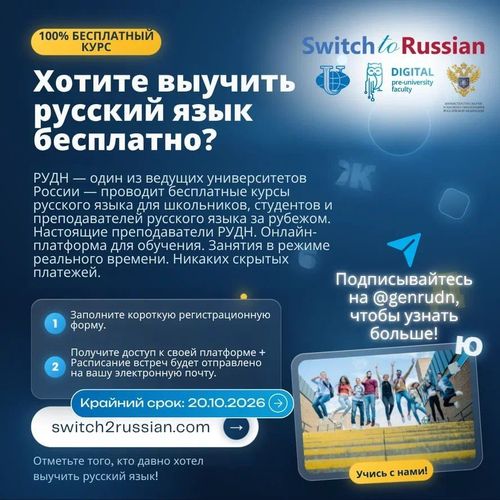
Learn Russian for free from home?
1 min
Amendments made to the use of deposit accounts by citizens of unfriendly countries
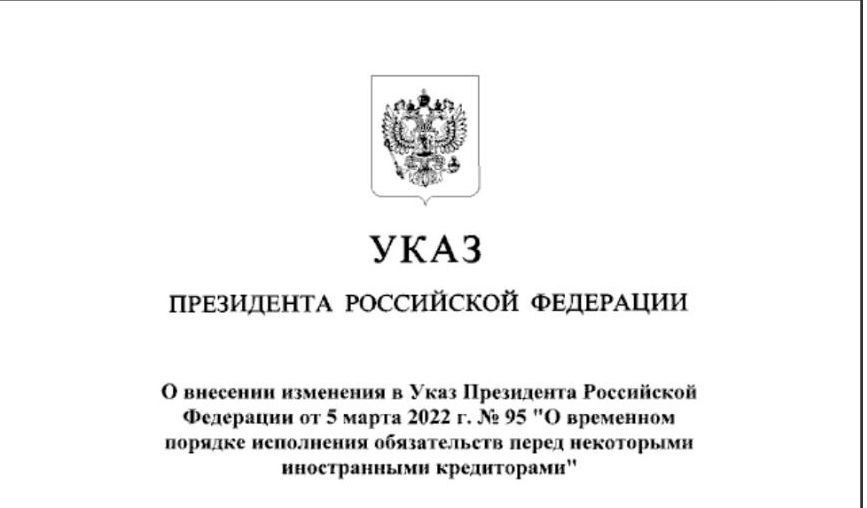
On August 4, 2026, Decree No. 550 of the President of the Russian Federation was published and entered into force. The document amended Decree No. 95 of the President of the Russian Federation on the temporary procedure for fulfilling obligations to certain foreign creditors.
Decree No. 95 has been in force since 2022: it introduced a special (temporary) procedure for settlements with certain foreign creditors. Among other things, it affected money in accounts and deposits—often, it could not simply be withdrawn, and settlements were made under special rules (including through type “C” accounts).
Earlier, from June 1, 2026, the President extended the special regulation of the fulfillment of obligations to nonresident persons from unfriendly countries to bank deposits No. 377. This concerns obligations to foreign creditors from “unfriendly” countries involving bank deposits and savings deposits exceeding 10 million rubles per calendar month, or the equivalent in foreign currency. To fulfill them, a special ruble-denominated type “C” account must be opened in the name of the nonresident, where the transferred funds are blocked. These funds may be converted into foreign currency only with permission from the Russian authorities.
In practice, this meant that payments on certain deposits and savings deposits could be credited to special type “C” accounts. (Citizens of unfriendly countries have encountered problems; we wrote about this here)
Decree No. 550 of 04.08.2026 supplemented Decree No. 95 with a new clause (12.1), which establishes an exception.
Now the temporary procedure (with regard to bank deposits and savings deposits) does not apply in two cases:
— if the deposit or savings deposit was opened by an individual who is a foreign creditor;
— if the deposit or savings deposit was opened by a branch, permanent establishment, or other separate subdivision of an organization that is a foreign creditor—provided that this subdivision is registered in Russia.
Individuals, as well as branches and permanent establishments of foreign organizations registered in Russia, are no longer required, under the general rule of Decree No. 95, to receive payments on bank deposits and savings deposits through type “C” accounts.
In addition, the decree allows such persons to receive in rubles funds that credit institutions [if they were credited from June 1, 2026, to August 4, 2026].
This change is particularly important for foreign citizens from unfriendly countries who have deposits or savings deposits in Russian banks and faced restrictions after the June expansion of the Decree No. 95 regime.
Important:
the change does not abolish the type “C” account regime as a whole. It continues to apply to other obligations and categories of foreign creditors if they fall under Decree No. 95.
Banks will review the application of Decree No. 95 to bank deposits and savings deposits held by individuals, as well as branches and permanent establishments of foreign organizations registered in Russia.
If, for some reason, a bank has already credited funds to a type “C” account during the period from June 1, 2026, to August 4, 2026, the decree entitles you to receive this money in rubles.
What to do in practice
Contact your bank. Ask an employee to check on what grounds and when the funds were credited to a type “C” account.
If it turns out that the crediting took place between June 1 and August 4, 2026, cite Decree No. 550 and request payment in rubles.
If the deposit is new or the bank has not yet fulfilled the obligation, discuss with the bank how things will work going forward so that the money is not transferred to a special account.
Important
The decree applies specifically to bank deposits and savings deposits. If other financial instruments are involved (loans, securities, ordinary current accounts), the regime may remain in effect. Therefore, when speaking with the bank, clearly specify which product you hold.
Overall, the decree resolved one of the most painful problems: the personal savings of foreigners held in deposits at Russian banks are no longer automatically “frozen.”
The decree entered into force on 04.08.2026.
Publication date: August 12, 2026
October 13, 2026
October 7, 2026
October 5, 2026
October 5, 2026

October 2, 2026
October 2, 2026

October 1, 2026

September 29, 2026

September 29, 2026
September 29, 2026

September 29, 2026
September 28, 2026

September 27, 2026

September 25, 2026
September 25, 2026

September 24, 2026

September 23, 2026

September 23, 2026

September 21, 2026

September 20, 2026
September 17, 2026
September 17, 2026

September 17, 2026
September 16, 2026

Do you have any questions?