
October 13, 2026
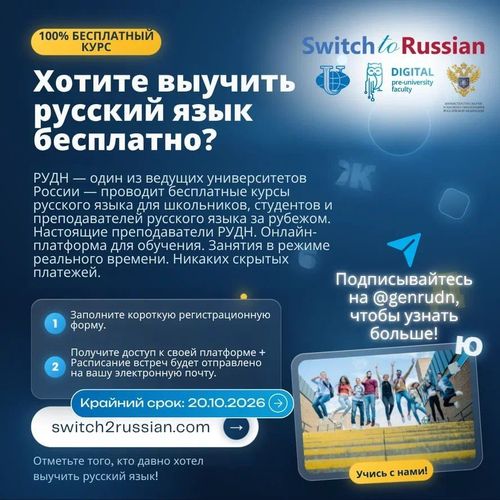
Learn Russian for free from home?
1 min
Participants in the Second Catherine Forum, dedicated to the relocation of foreign nationals to Russia, discussed many aspects of migration and humanitarian cooperation with other countries during sessions and discussions. Participants in the “Humanitarian Relocation” session spoke openly about the main problems foreigners face in our country.
Blogger and public figure Tim Kirby, who describes himself as “the most Russian American,” immediately set the tone for the conversation. He began by describing the difficulties foreign expats arriving in Russia face, especially in obtaining registration and finding work. Despite every effort to promote Russia as a country of great opportunities, traditional values, and a bright future for people from Western countries, society and the legislative system are not yet ready to warmly welcome new residents. Landlords do not want to register foreigners at their legally owned properties (partly out of fear that something might go wrong, and partly because they are in no hurry to report their income to the tax authorities), while employers are reluctant to hire foreign specialists for fear of violating rules on paperwork and registration with the migration service. In addition, many high-tech fields simply do not allow foreign nationals to be hired because of “secrecy” restrictions.
Englishman Craig Ashton, speaking about his experience of moving, noted the lack of adequate information about Russia in the Western media landscape. As a result, anyone who decides to come here to work or live is, by definition, an adventurer and a thrill-seeker. But the inability to convey the truth about our country to Western audiences stems from the crude and heavy-handed opposition of those countries’ authorities, and the blocking of Russian media and the websites of various organizations and government bodies. Bloggers and journalists therefore use social networks, private groups, and messaging-app chats to distribute their media content. In addition, learning Russian is one of the most difficult tasks for foreigners in Russia. There are still too few courses, language schools, or tutors qualified to teach Russian as a foreign language.
To address the problems of communication and mutual support among foreign expats, Craig Ashton and his colleague Guy Eames founded the club The bridge (The Bridge) three years ago.
“We brought together foreigners living in Russia and tried to attract those living abroad. We talk with Iranians, Africans, and other diasporas. We have a future in Russia, we have the opportunity to fulfill our potential, and it is safe here for our children. We meet once a month, and there are already more than 800 people in the club. We are trying to create an ecosystem for foreigners: finding work and a place to register, and preparing for Russian-language exams,” Guy explains.
Guy also spoke about another problem that seriously diminishes quality of life at the initial stage.
The driving test is conducted in Russian, which means you cannot drive until you have validated your license. Westerners cannot imagine life without a car; it is their main means of transportation. So going without one for several months is a serious ordeal. But in Moscow and other large Russian cities, the extensive and affordable taxi system saves the day. The same cannot be said for those who want to make the countryside their home. In any case, for Guy and Craig, the most important thing about their club is its social capital—the networking it enables among people. Because in Russia, it is important to find your own people.
The importance of finding one’s community and building a network of contacts was discussed by another participant in the conversation—the Frenchman from Bordeaux Alexandre Stefanesco. He is a co-founder of the organization “Welcome to Russia,” where, together with State Duma deputy Maria Butina, he helps foreigners move to Russia without barriers. In his view, business practices in Russia and Western countries differ, starting with the submission of a résumé. Here, when sending a résumé, an applicant should call the employer themselves and politely ask whether they received it and had a chance to review it. The résumé that works best is one sent “through a connection,” to a company where someone you know works. Such personal connections and contacts play a leading role in the business world in Russia. But someone has to explain this to a foreigner. Otherwise, the person risks being disappointed. Informal communities, clubs, and associations are needed precisely to create a close-knit circle of contacts, provide opportunities to expand it, and help people gain a better understanding of the specific features of life in Russia.
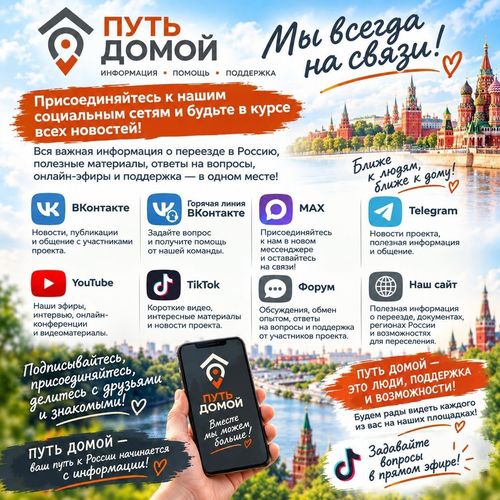
Another participant in the “Humanitarian Relocation” session, Anatoly Bublik, leader of the “The Way Home” project, said in an interview with the Ukraina.ru portal that 2026 should be a breakthrough year for migration policy. This is because, during 2024/25, decisions were sometimes made that contradicted one another regarding the process of relocating to Russia.
Indeed, while adopting decrees and laws to make relocation easier, the authorities undermined their effect with other measures that erected barriers to resettlement. One example is the law requiring children of foreign nationals enrolling in Russian schools to take Russian-language exams. This category includes the children of our compatriots, as well as children of foreigners arriving under Decree 702, “On Humanitarian Assistance to Citizens of Unfriendly Countries”; now it also applies to the children of foreigners covered by Decree 883, “On Talents.”
Or Decree No. 821 on the mandatory signing of a contract with the Armed Forces of the Russian Federation by certain categories of expats before they can be granted Russian citizenship. In practice, however, all men holding foreign citizenship who apply for Russian citizenship are sent to sign a contract for military service in the ranks of the Russian Armed Forces. As a result, the relocation process has ground to a halt, and those already in Russia have begun considering moving to another country.
The New Year always brings hope for the better, for change and progress. But for that to happen, all public and government institutions involved in the country’s migration policy must work together in a clear and coordinated way. Closer cooperation among them, combined with a well-considered scientific and methodological approach to migration processes, will be key to breaking through the barriers facing people relocating to Russia.
Author: Alla Shelyapina (https://vezdenashi.ru)
Publication date: December 25, 2025
October 13, 2026
October 7, 2026
October 5, 2026
October 5, 2026
October 2, 2026
October 2, 2026

October 1, 2026

September 29, 2026
September 29, 2026
September 29, 2026
September 29, 2026
September 28, 2026
September 27, 2026

September 25, 2026
September 25, 2026
September 24, 2026

September 23, 2026
September 23, 2026
September 21, 2026
September 20, 2026

September 17, 2026
September 17, 2026
September 17, 2026
September 16, 2026

Do you have any questions?