
October 13, 2026
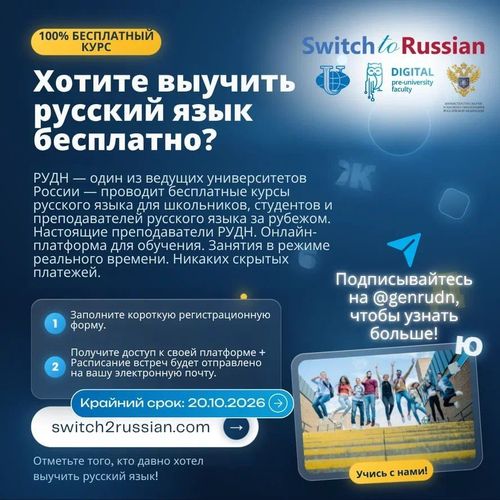
Learn Russian for free from home?
1 min
The Protection of Compatriots’ Rights and Historical Memory at the St. Petersburg International Legal Forum 2025
The XIII St. Petersburg International Economic Forum was held in the northern capital from 19 to 21 May. Participants in many sessions touched in one way or another on the topic of compatriots and the Russian diaspora.
Countering Russophobia and the Discrediting of International Law
Stanislav Aleksandrov, Deputy Chairman of the Board of the Association of Lawyers of Russia (ALR), and a member of the Government Commission for Compatriots Abroad, spoke about the results of the charitable project “For the Rights of Compatriots” at the session “The Law Is on Our Side: Year of the Defender of the Fatherland”. Established by the ALR at the height of rampant Russophobia in 2022, the project actively cooperates with the Coordinating Councils of Compatriots and their members.
Recently, lawyers participating in the project have provided more than 1500 initial legal consultations. And although there is currently some decline in Russophobic activity (with the exception of the Baltic states), pro bono consultations are in great demand. Most questions concern the protection of labor, social, and civil rights. The project website operates around the clock.
It is not only our citizens who face discrimination, but also our businesses. The cases are unprecedented: accounts are closed, property is seized, and transactions are annulled. According to Stanislav Aleksandrov, such lawlessness is taking place primarily in Western Europe and North America. The work of Russian lawyers in these conditions can be compared to fighting on enemy territory.
“This is an attempt to fight for the rights of our compatriots on foreign territory, according to foreign rules. And we must admit that European human rights institutions have completely discredited themselves. The Council of Europe and the ECHR—in the case of our Association, we have seen that for many years they lectured us and our country on democracy and human rights, yet showed their true face,” the speaker said.
Participants in the session “The West’s Legal Aggression Against Russia: Current Challenges and Ways to Counter It” discussed the complete discrediting of the international legal system and ways out of the crisis. A representative of Russia’s Foreign Intelligence Service called on the global majority to declare unilateral sanctions illegal.
Ivan Smyslov of the Legal Support Department of the Russian Foreign Intelligence Service openly acknowledged that there was no point in applying to international organizations such as the Investment Arbitration Court in The Hague.
“They are biased from the outset and are predisposed against us. Therefore, only by uniting with our friends and partners can we effectively counter the West’s unlawful measures,” the speaker believes.
Ivan Smyslov proposed creating a common platform, based on a treaty or agreement, for Russia’s partner countries to jointly combat legal aggression against the parties to the agreement. On the basis of reciprocity, partners could take asymmetrical or coordinated action against the aggressor.
“Those with ports used by hostile states should close these ports to their ships. Those with Western property should seize it. Countries of the Global South understand that most legal mechanisms operate selectively in the interests of the golden billion. Many are frustrated by the limited means at their disposal to protect their national interests, and legal mechanisms that offer an alternative to the existing ones are attracting genuine interest in the Global South as a tool for combating neocolonial practices.”
The Foreign Intelligence Service representative proposed beginning work on a concept for such a new legal mechanism or a new international judicial body, as the starting point for the emergence of a healthy and fair global legal system. “The response to collective legal aggression must also be collective,” said Federation Council Deputy Speaker Konstantin Kosachev, the session moderator, in support of Smyslov.

Our Compatriots and Historical Memory
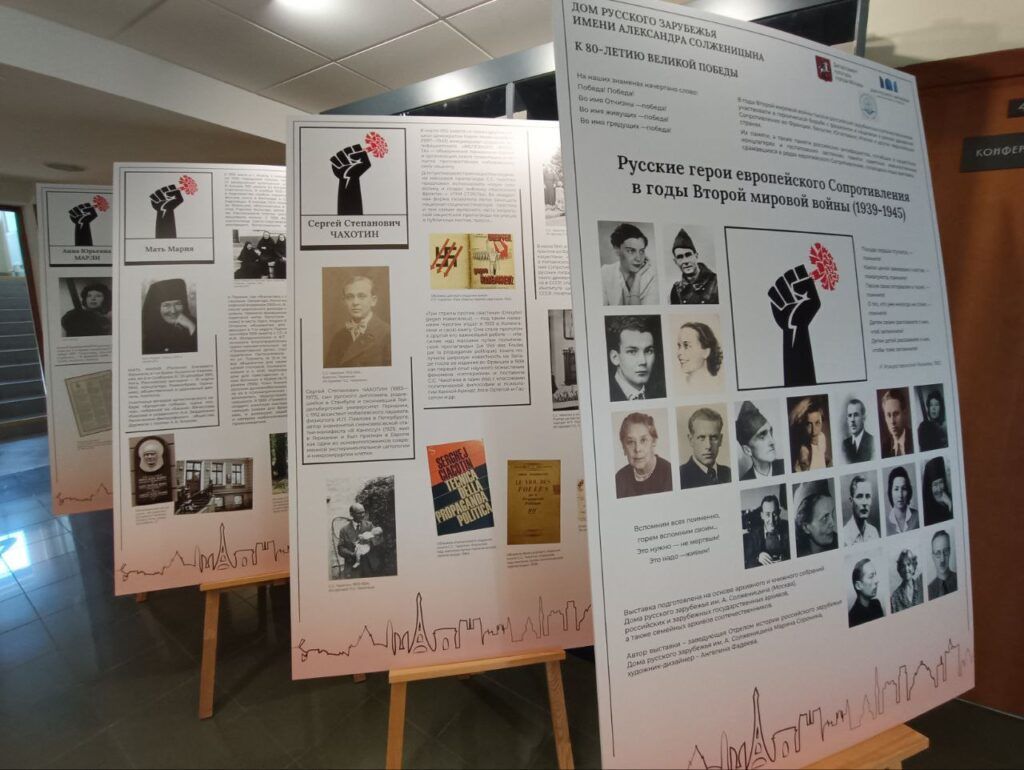
In the Year of the Defender of the Fatherland, protecting historical memory and the contribution of our compatriots to victory over fascism requires legal support and even active legal defense abroad. The demolition of monuments to Soviet liberators in Western countries, especially in the Baltic states, is not only an inhuman and cynical act of vandalism, but also a violation of intergovernmental agreements. The role of the Soviet Army in liberating 14 European countries from German occupation and freeing prisoners from Nazi concentration camps, including Auschwitz, Majdanek, and Sobibor, is being downplayed. These and other historical facts today require constant reminders and legal protection against falsification. Separately, we must remember the problem of how to describe and legally assess the participation in the European Resistance of Russian émigrés, prisoners of war, and Soviet citizens deported to Europe for forced labor. As part of the Russian world and Russian civilization, they continued the Great Patriotic War, but outside the USSR. It is time to recognize them as participants in the war and their descendants as descendants of victors.
Participants in the session “Foreign Interference: Lessons from History” also addressed compatriots and the Russian diaspora. Russian Justice Minister Konstantin Chuychenko recalled in his speech Nicholas I’s Manifesto, “Russia, the bastion of Europe, will not yield to revolutionary influences,” issued on 26 March 1848. At the time, over the course of two years, more than 26 thousand Russians living in France, Austria, the German lands, and Italy, then scorched by revolutionary fervor, returned to their homeland, which the emperor had proclaimed a realm of peace and stability. Chuychenko drew a parallel with the present day, when not only Russian speakers from Europe and North America are returning to their homeland, but ethnic Europeans, Americans, and Canadians are also moving to Russia in the hope of preserving their traditional values and familiar way of life.
Foreign Expats in Russia
Value-based migration to the Russian Federation by foreign expats from unfriendly countries under Decree No. 702, adopted in August 2024, was discussed at the session “Adventures of Foreigners in Russia”. According to session participants, the Russian authorities are doing everything possible to ensure that these adventures do not turn into misadventures, something that still happens fairly often during relocation.
Ekaterina Larina of the Ministry of Digital Development spoke about the special multilingual RuID app for foreigners entering Russia and the multimedia internet portal “Window to Russia”, which provides an overview and basic knowledge of the culture, geography, and history of our country.
In addition, the session covered a new program to attract impatriates, currently being developed by the Agency for Strategic Initiatives. Denis Abdrakhmanov, Director of the Legal Initiatives Center at the Agency for Strategic Initiatives, explained to those present whom the new term “impatriate” is proposed to describe. According to the Agency’s experts, these are “talented students, scientists, in-demand specialists, entrepreneurs, investors, and representatives of the creative industries who share our spiritual and moral values and wish to move to Russia.”
The Headquarters for Supporting the Relocation of Impatriates, established in December 2024, is developing a regional standard for their social, cultural, and economic integration; optimal information logistics for migration to Russia; and a dedicated resource, “Time to Live in Russia.”
Publication date: May 26, 2025
October 13, 2026
October 7, 2026
October 5, 2026
October 5, 2026
October 2, 2026
October 2, 2026
October 1, 2026

September 29, 2026
September 29, 2026
September 29, 2026
September 29, 2026
September 28, 2026
September 27, 2026

September 25, 2026
September 25, 2026
September 24, 2026

September 23, 2026
September 23, 2026
September 21, 2026
September 20, 2026
September 17, 2026
September 17, 2026
September 17, 2026
September 16, 2026

Do you have any questions?