
October 13, 2026
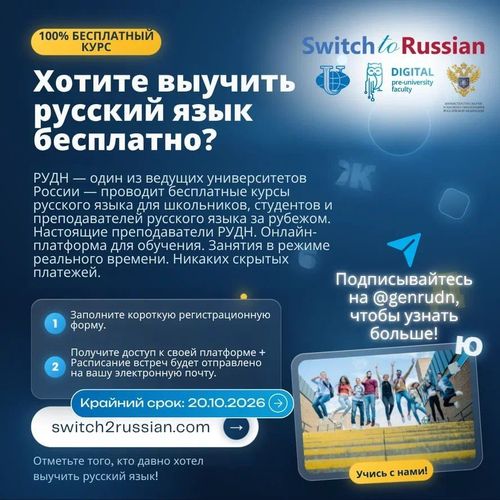
Learn Russian for free from home?
1 min
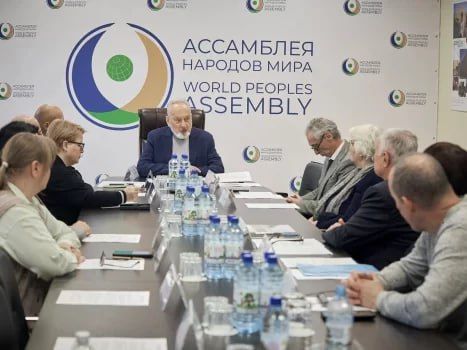
On December 15, a press conference was held at the Assembly of the Peoples of the World venue, dedicated to the final stage of the project “Let Us Remember Everyone by Name! The Moscow People's Militia,” organized in connection with the Year of the 80th Anniversary of Victory in the Great Patriotic War.
From December 8 to 26, 2025, the traveling photo exhibition “Let Us Remember Everyone by Name! The Moscow People's Militia” is on display at 13 venues across Moscow, including:
leading higher education institutions;
colleges;
the State Central Museum of Contemporary History of Russia.
The exhibition comprises 10 panels measuring 120×90 cm and is based on materials from state and departmental archives, data from search organizations, family archives of militia descendants, and analytical materials from the project.
“Work to preserve historical memory is one of the most important, if not the most important, aspects of the Assembly of the Peoples of the World’s work,” said Valery Ruzin, Deputy Secretary General of the Assembly, in his welcoming remarks. “The descendants of the people's militia and the heroes of the Great Patriotic War unite and bring together post-Soviet civilization, which has become one of the most important tasks of our lives today.”
Moscow organizations that already bring together descendants of different divisions took part in the project. There were 16 such divisions formed in 1941. In July 1941, 12 people's militia divisions were formed in Moscow, and another 4 divisions in October–November. About 180 thousand people joined the militia, including 20 thousand from the Moscow Region.
According to Anton Taran, Director of the Autonomous Nonprofit Organization “Community of Descendants of Moscow People's Militia Members of the Great Patriotic War,” it is precisely through such concrete facts and personal stories that young people should be engaged on the subject of patriotic education. An important part of the project was its broader reach beyond Russia and the search for family members of militia members living in other countries. After all, they are connected by the delicate thread of human memory, and they help preserve the historical truth about the last world war.
Professor Mikhail Polyansky, Academic Secretary of the Association of World War II Historians, supported him, noting that such search work provides the basis for an informal academic and educational process in educational institutions.
The speakers named several key outcomes of the project: a dedicated section was created on the “Network of History” media platform, where project participants entered the names and biographies of 2 600 militia members. They include representatives of 21 nationalities. A traveling photo exhibition was organized at 13 venues in Moscow, and more than 8 000 students will see it. During the year of the project, descendants of 19 militia members responded to thematic publications in the media and on media platforms. Descendants of about 300 militia members live in 12 countries around the world today. However, the project team is eager to find as many family members of the 1941 Moscow People's Militia as possible in order to reconstruct the lives and biographies of the heroes as fully as possible.
“As of today, according to my estimates, we can reliably identify no more than 30 thousand names of Moscow People's Militia members from various sources. Unfortunately, they have not all yet been brought together, and we have set ourselves the task of compiling an electronic book of remembrance so that this information can be accessible to everyone,” said Igor Gorodnichy, creator of the “Network of History” media platform, explaining his role in the project.
About 180 thousand people served in the Moscow People's Militia. No more than 20% survived. In the autumn of 1941, despite suffering heavy losses, the militia members prevented the enemy from breaking through to Moscow. Five Moscow people's militia divisions that suffered heavy losses in battle (the 2nd, 7th, 8th, 9th, and 13th) were disbanded in October 1941, having been destroyed at the front. Among the soldiers of the 21st Moscow People's Militia Division, which was later incorporated into the 77th Guards Rifle Division, 68 became Heroes of the Soviet Union.
The project is being implemented by the Assembly of the Peoples of the World together with the Moscow City Committee for Public Relations and Youth Policy, with a grant from the Mayor of Moscow, and aims to preserve the historical memory of Muscovites who voluntarily took up the defense of the capital in 1941.
Publication date: December 16, 2025
October 13, 2026
October 7, 2026
October 5, 2026
October 5, 2026
October 2, 2026
October 2, 2026
October 1, 2026

September 29, 2026
September 29, 2026
September 29, 2026
September 29, 2026
September 28, 2026
September 27, 2026

September 25, 2026
September 25, 2026

September 24, 2026

September 23, 2026
September 23, 2026
September 21, 2026
September 20, 2026

September 17, 2026
September 17, 2026
September 17, 2026
September 16, 2026

Do you have any questions?