
October 13, 2026
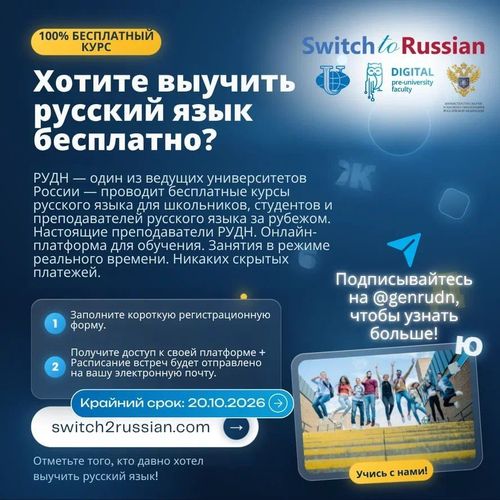
Learn Russian for free from home?
1 min
The Omsk Region Government and the “Path Home” project step up cooperation to attract migrants to the region

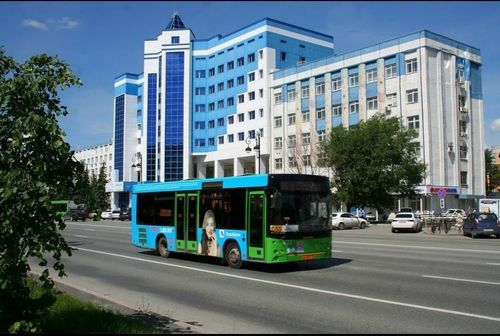
From September 25 to 28, a group of foreign bloggers will be in the Omsk Region on a press tour to get a closer look at the conditions for resettlement in this hospitable Siberian region. The trip is organized by the “Path Home” project together with the Omsk Region Government and Rossotrudnichestvo.
This is the first large-scale joint initiative following the working visit to the region on August 25–28 by Anatoly Bublik, leader of the “Path Home” social movement. During the visit, agreements were reached to continue joint efforts to attract new settlers.
In the 1990s, more than 50,000 ethnic German families left the Omsk Region. They were descendants of residents of German duchies and electorates once invited to the Russian Empire by Catherine II. In those years, there were dozens of settlements with concentrated German populations. For many years, the region lost more people than moved there permanently. Thirty years later, people began returning to their homeland, and about 1,400 people arrived in the region last year. In the first half of 2025, the migration balance turned positive for the first time, with hundreds of compatriot settlers joining the ranks of new Omsk residents. Most came from neighboring Kazakhstan and Germany. It is no coincidence that people from Germany come here in particular. Since 1992, the Azov German National District has been part of the Omsk Region, comprising 27 settlements with more than 25,000 residents. Russian and German are both spoken here; there are German schools and churches, and the education and cultural systems are designed to sustain ethnic identity.
But the main factor making the region attractive not only to Russian Germans but also to other settlers is that the local authorities are seriously committed to a program for attracting compatriots. Omsk has ranked among the top five destinations for settlers for many years, and for the second year running it has been among the top three in the number of benefits and provisions available to them. Omsk is preparing to establish the position of commissioner for compatriots’ rights. The region has abolished the work-experience and education requirements for citizens of unfriendly countries. There is a social hotel where any settler from a vulnerable population group can stay on preferential terms. The hotel has social and psychological support services, as well as a family service center. If a family rents housing, the regional budget provides 70,000 rubles to cover six months’ rent. Weekly meetings with consultations from specialists from various services are held at the “Personnel of Russia” employment center. And if a settler plans to start their own business, they can take a course in entrepreneurship and receive one-time assistance of 300 thousand rubles to launch a business.
The authorities’ systemic efforts are all the more effective when the region’s nonprofit sector is active in helping people adapt and settle into their new home more quickly. After all, everyone who has ever moved to a new place knows how critically important it is to have at least one kind person they can turn to for help, or simply talk to heart-to-heart, have tea with, or go for a walk. Above all, people need another person—someone close and understanding, ready to listen and offer support. In Omsk, every compatriot receives help with these matters. Settling into a new place, getting advice and receiving a warm welcome are supported not only by the “Path Home” organization, but also by members of the local public organization “New Omsk Residents”, who help settlers, not only compatriots.
This year marks 15 years of the Omsk Region State Program to Assist the Voluntary Resettlement of Compatriots. At the “Omsk Region and Compatriots: 15 Years Together” forum held on June 11, government and regulatory agency representatives, public figures, and students from 23 Russian regions and foreign countries discussed modernizing the state resettlement program. Since 2009, more than 50 thousand people have moved to the Omsk Region under the State Program for the Resettlement of Compatriots. In 2025, 860 people have already moved to the region, and their number is expected to exceed one thousand by year-end. Active cooperation between the regional government and the “Path Home” social movement played a major role in increasing the flow of settlers.
Publication date: September 17, 2025
October 13, 2026
October 7, 2026
October 5, 2026
October 5, 2026

October 2, 2026
October 2, 2026
October 1, 2026

September 29, 2026
September 29, 2026
September 29, 2026
September 29, 2026
September 28, 2026
September 27, 2026

September 25, 2026
September 25, 2026

September 24, 2026

September 23, 2026
September 23, 2026
September 21, 2026

September 20, 2026
September 17, 2026
September 17, 2026
September 17, 2026
September 16, 2026

Do you have any questions?