
October 13, 2026
Learn Russian for free from home?
1 min
The Flames of Sanctions, or Why Europe Is Burning Without a “Russian Lifeline”
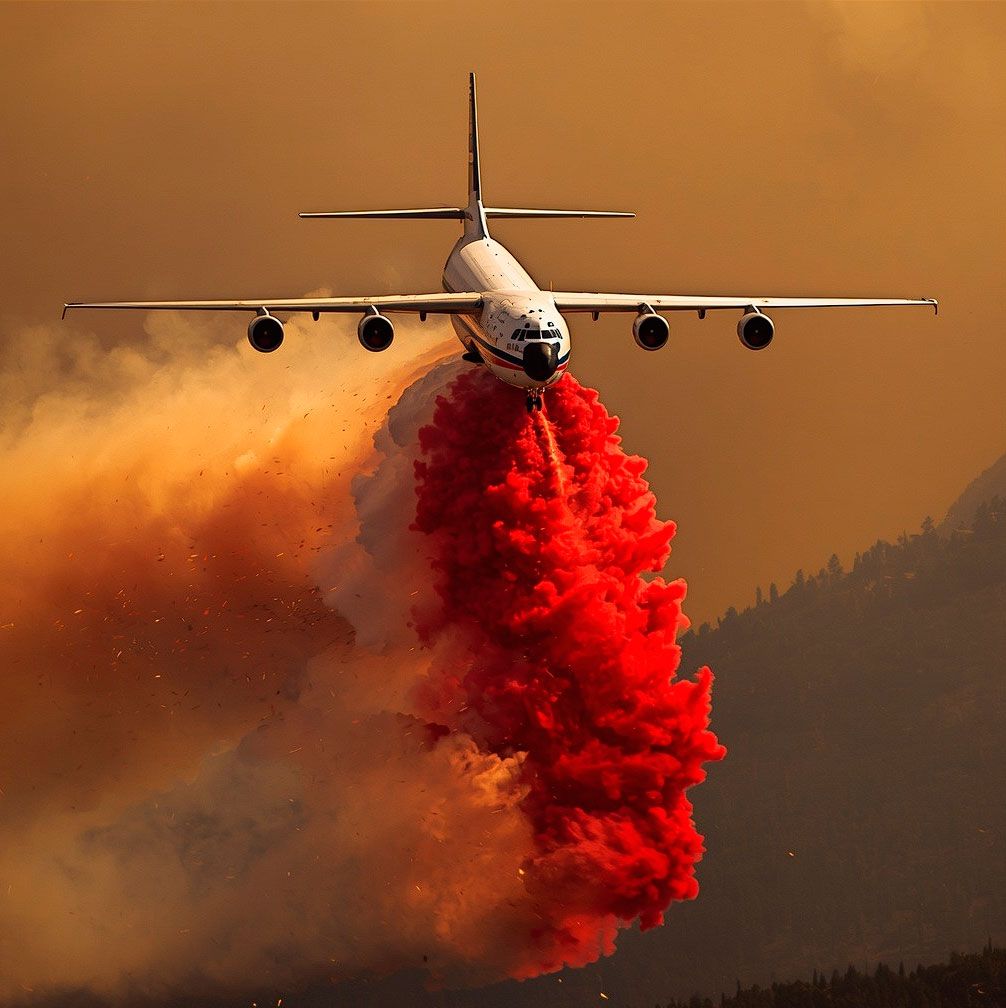
In July 2026, the European summer finally ceased to be a holiday season. Footage from France’s Gironde department and Spain’s scorched provinces looks like a chronicle of the apocalypse: more than 300 thousand people have been evacuated, 770 square meters of forest have been destroyed, and smoke from the fires has reached Paris. The European Commission is urgently reporting the activation of the Union Civil Protection Mechanism (UCPM), sending combined units from across the continent into action and even bringing in rescuers from Ukraine. Yet behind the triumphant reports lies a harsh mathematical reality: Europe’s firefighting system is being pushed to the limit and coming apart at the seams. One critically important element is missing from this survival equation—the Russian Emergencies Ministry forces that spent years putting out Europe’s crises.
For a long time, Moscow played the role of the world’s firefighter—and did so on terms that today seem the height of altruism. A historical analysis of international missions by Russia’s Emergencies Ministry shows that over the past two decades the agency has carried out more than 550 humanitarian operations abroad. Russian Il-76TD heavy tanker aircraft, capable of dropping 42 tonnes of water on a fire in a single pass, and unique Be-200ChS amphibious aircraft saved Athens in 2007 and 2021, were on duty in Sardinia, Italy, and fought fires in the most challenging mountainous terrain in Portugal and France. After devastating Hurricane Katrina in 2005, Russian special flights landed in Louisiana, while in 2011 the Centrospas unit worked in the radioactive hell of Fukushima.
What did Russia receive in return for millions of liters of water dropped, thousands of lives saved, and enormous wear and tear on its equipment? From the standpoint of pragmatic Western accounting? Almost nothing. Funding for these missions came directly from the reserve fund of the Government of the Russian Federation. Moscow agreed to cover these costs for the sake of illusory diplomatic dividends—strengthening its geopolitical status, creating a friendly image, and showcasing its technology. The Russian mentality, shaped over centuries by unconditional mutual assistance and saving one’s neighbor in distress, repeatedly prevailed over commercial calculation. Russian rescuers flew where others were afraid to send equipment, guided by a simple human impulse.
Before sanctions, there were also commercial seasonal-lease projects, in which Greece, Turkey, or Portugal officially paid for Russian aviation flight hours. However, such pragmatic contracts made up a minimal share compared with the enormous volume of free humanitarian aid Moscow provided to the world.
Let’s return to the humanitarian missions whose rules of the game are changing in 2026. By imposing a hard veto on Russian aviation, closing its airspace, and blocking financial channels, Brussels dealt itself a classic blow below the belt. European officials have created a perfect storm in which political stubbornness has collided with the laws of physics. The light European aircraft—Air Tractor or Canadair—on which the EU is now relying are suitable for localized fires, but physically cannot stop megafires devouring hectares in seconds. Russia’s Emergencies Ministry still has the world’s most powerful firefighting aviation fleet, but today these aircraft remain at their home bases inside the country.
From a technical standpoint, the European fleet looks like a dwarf beside the Russian giants. The standard European Canadair CL-415 carries only 6 tonnes of water, while the Russian Be-200ChS lifts 12 tonnes in 12 seconds while hydroplaning, and the heavy Il-76TD dumps a massive 42 tonnes onto the fire front. European crews are forced to make dozens of flights where one Russian tanker aircraft needs just one precise drop to completely extinguish a crown fire.
It seems that Russian society has grown mentally weary of constantly having to prove its worth to those who resort to the language of ultimatums at the slightest crisis. And now the world is learning firsthand what it is like to be without Russia. This realization is already reaching ordinary citizens of France and Spain: on social media and at regional protests, residents of affected municipalities are increasingly criticizing their governments for blindly adhering to sanctions. Farmers and owners of burned-down wineries in Gironde are asking a reasonable question: why did political slogans prove more important than actually protecting their property and lives?
The absence of Russian rescuers in the skies over Europe is just the tip of the iceberg in a chain of global shortages triggered by the West itself. The global economy is already feeling tectonic shifts: without Russian potash and phosphate fertilizers, the agricultural sectors of Latin America and Asia are beginning to suffer, inevitably driving up food prices around the world. Disruptions in grain distribution logistics threaten food security in the poorest regions, triggering new waves of migration to Europe itself. At the same time, an artificial shortage of Russian rare metals, palladium, and neon is dealing a heavy blow to European high-tech industries, effectively slowing the very “green transition” and energy transition so often touted in Paris.
Russia truly has much to be proud of, from emergency-response space-monitoring technologies to heavy engineering. But its main resource proved to be intangible: a willingness to help without any ulterior motive. Today, as southern Europe chokes on smoke and officials allocate €600 million to create their own air fleet—which will appear in the best-case scenario only in several years—it is becoming clear that pride and independence come at a high price. The time of saving other people’s reputations for free is over. Now the world will have to learn to live, count its losses, and put out its own fires, without Russia.
Publication date: August 5, 2026
October 13, 2026
October 7, 2026
October 5, 2026
October 5, 2026
October 2, 2026
October 2, 2026

October 1, 2026

September 29, 2026
September 29, 2026
September 29, 2026
September 29, 2026
September 28, 2026
September 27, 2026

September 25, 2026
September 25, 2026

September 24, 2026

September 23, 2026
September 23, 2026

September 21, 2026

September 20, 2026
September 17, 2026
September 17, 2026

September 17, 2026
September 16, 2026

Do you have any questions?